People treat water preparedness like a binary question: “Do I have water stored?” Yes or no. But actual water emergencies introduce variables that a stack of gallon jugs in the garage does not solve. Contamination, container integrity, filter lifespan, treatment method compatibility, and consumption rates all interact in ways that catch even experienced preppers off guard.
This checklist was built from EPA guidance documents, FEMA’s water sanitation guidelines, and field notes from families who rode out multi-day water disruptions during the 2024 hurricane season and the East Palestine, Ohio chemical spill. It covers storage, filtration, purification, and the overlooked gaps between them.
Part 1: Storage Fundamentals
The standard recommendation is one gallon per person per day. That number, published by FEMA and repeated across every preparedness site, covers drinking and basic sanitation. It does not cover cooking (add 0.5 gallons if you plan to prepare dehydrated food), cleaning wounds (another 0.5 gallons minimum for a family with children), or hygiene beyond the bare minimum.
A realistic target for a family of four over 72 hours is 15-20 gallons, not 12.
Container Selection Matters More Than People Think
Not all water containers are created equal, and the wrong choice causes real problems:
- Commercially sealed water pouches (5-year shelf life): The gold standard for long-term storage. Individual pouches prevent cross-contamination and survive freezing better than rigid bottles. Downside: higher cost per gallon, more packaging waste.
- BPA-free polyethylene jugs (blue tint, food-grade): Good for 6-12 month rotation cycles. The blue tint blocks light and slows algae growth. Must be stored away from concrete floors (chemicals leach through concrete into plastic over time).
- Repurposed beverage containers: Acceptable only if they originally held water or clear beverages. Former milk jugs are unsuitable. Residual milk proteins create bacterial growth even after thorough washing. Former juice bottles retain sugar residue that feeds microorganisms.
Rotation schedule: Commercially sealed pouches, replace every 5 years. Home-filled containers, replace every 6 months. Mark each container with the fill date using a permanent marker.
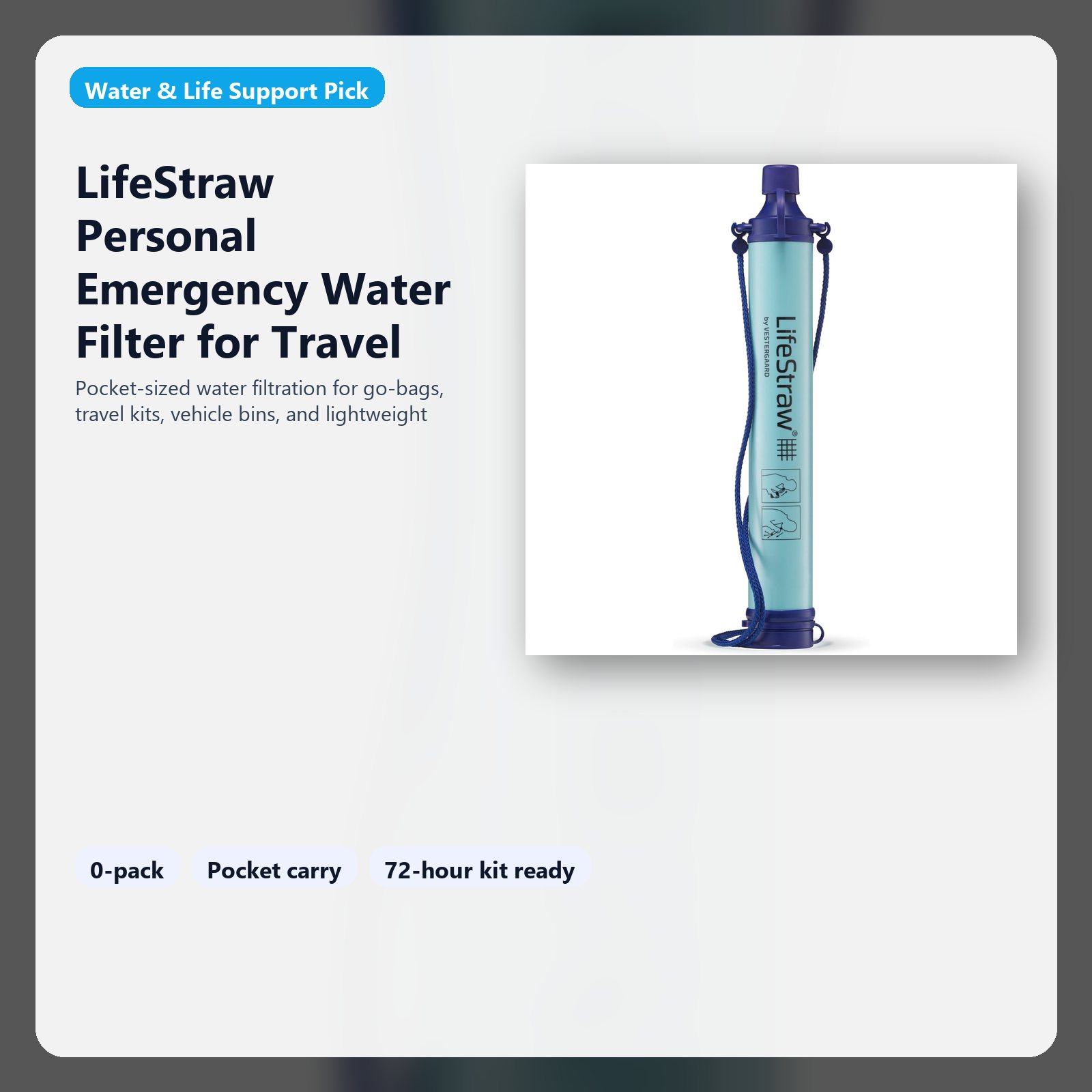
Part 2: Filtration vs Purification (They Are Not the Same Thing)
This is the single biggest source of confusion in water preparedness. People use “filter” and “purify” interchangeably, but they address completely different threats:
| Method | Removes | Does NOT Remove | Best For |
|---|---|---|---|
| Mechanical filter (0.2 micron) | Bacteria, protozoa, sediment, some heavy metals | Viruses, dissolved chemicals, salt | Stream/lake water, municipal water after pipe breaks |
| Chemical purification (chlorine/iodine tablets) | Bacteria, viruses, some protozoa | Cryptosporidium, sediment, chemicals, taste | Clear water of unknown microbial status |
| UV treatment (SteriPEN-type devices) | Bacteria, viruses, protozoa | Sediment, chemicals, turbid water (UV cannot penetrate) | Clear water, international travel |
| Boiling (1 min at rolling boil, 3 min above 6,500 ft) | All biological pathogens | Chemicals, heavy metals, sediment | Known clean water source with suspected biological contamination |
The practical takeaway: no single method covers all threats. The most resilient approach is a two-stage system: mechanical filtration first (removes sediment and bacteria), followed by chemical treatment or UV (eliminates viruses that pass through the filter). This is how humanitarian organizations configure field water systems, and it is how your home preparedness kit should work.
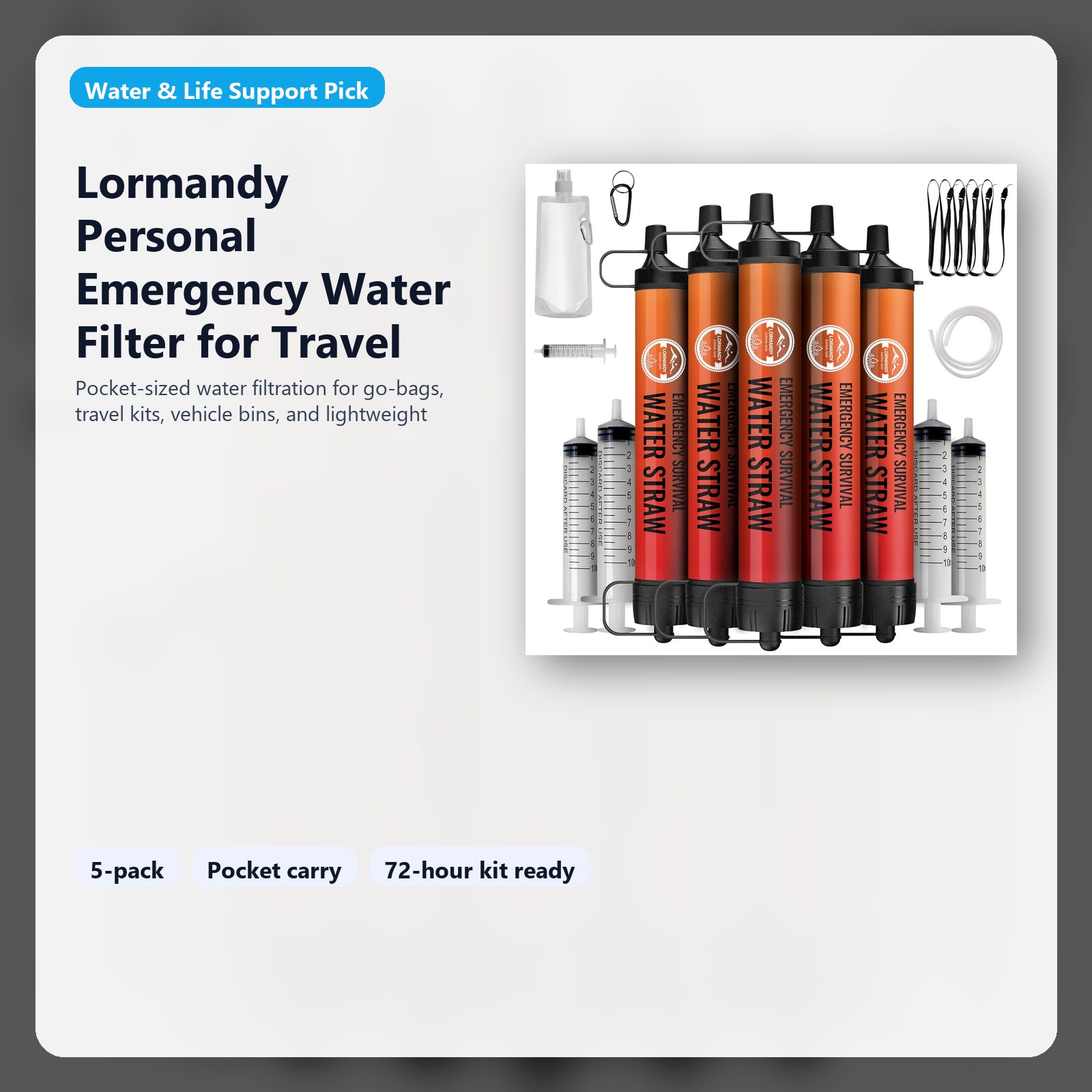
Part 3: The Complete Checklist
Tier 1 — Immediate Supply (0-72 hours)
- 15-20 gallons stored water (sealed pouches or food-grade containers), clearly dated
- One personal water filter per adult family member (1,000+ gallon lifespan)
- 50 water purification tablets (treats 50 liters) as chemical backup
- Collapsible water container (2.5-5 gallon) for carrying water from distribution points
Tier 2 — Extended Disruption (3-14 days)
- Gravity-fed filter system (family-sized, processes 1-3 gallons per hour without pumping)
- Additional 20+ gallons stored water or access to a natural water source within walking distance
- Bleach (plain, unscented, 5-6% sodium hypochlorite): 8 drops per gallon of clear water, 16 drops for cloudy water, wait 30 minutes
- Clear plastic bottles for SODIS (solar disinfection): fill, place in direct sunlight for 6+ hours on a hot surface
Tier 3 — Infrastructure Failure (14+ days)
- Rainwater collection system (tarp + barrel + first-flush diverter)
- Spare filter elements for your gravity system (most need replacement every 3,000-6,000 gallons)
- Water testing strips (bacteria + pH + chlorine levels) to verify treatment effectiveness
- Pool shock (calcium hypochlorite, 68%+): shelf-stable alternative to liquid bleach for long-term storage
Part 4: Common Mistakes That Compromise Water Safety
- Storing water in direct sunlight: UV accelerates plastic degradation and promotes algae growth in translucent containers. Store in a cool, dark location.
- Assuming tap water is safe after a boil notice is lifted: Flushing protocols matter. Run each faucet for 5 minutes after service is restored. Run hot water for 15 minutes to flush the water heater. Discard ice made during the disruption.
- Ignoring the hot water heater: A standard 40-gallon water heater is an emergency water source most people forget. Turn off the gas or electric supply, let it cool, then drain from the valve at the bottom. The water is potable if the heater was functioning normally before the outage.
- Using a filter past its rated lifespan: A 1,000-gallon filter that has processed 1,001 gallons is worse than no filter, because it creates false confidence. Track your usage.
- Failing to pre-filter turbid water: Muddy or silty water clogs mechanical filters rapidly and prevents chemical treatment from working effectively. Strain through a clean cloth or coffee filter first to remove visible sediment, then apply your primary treatment method.
The Bottom Line
Water preparedness is a system, not a stockpile. Stored water covers the first 72 hours. Filtration extends your supply using available water sources. Purification addresses threats that filters miss. And knowledge of your home’s hidden water sources (water heater, toilet tanks with clean water, rainwater) provides options when everything else runs out.
Build your water system in tiers, test your equipment annually, and rotate your stored supply on a fixed schedule. The families who handled real water disruptions most effectively were not the ones with the most gallons stashed away. They were the ones who understood what each layer of their system did and what it could not do.
Browse our water filtration and storage products to build your own multi-layer water preparedness system, or return to the main shop for complete emergency readiness equipment.