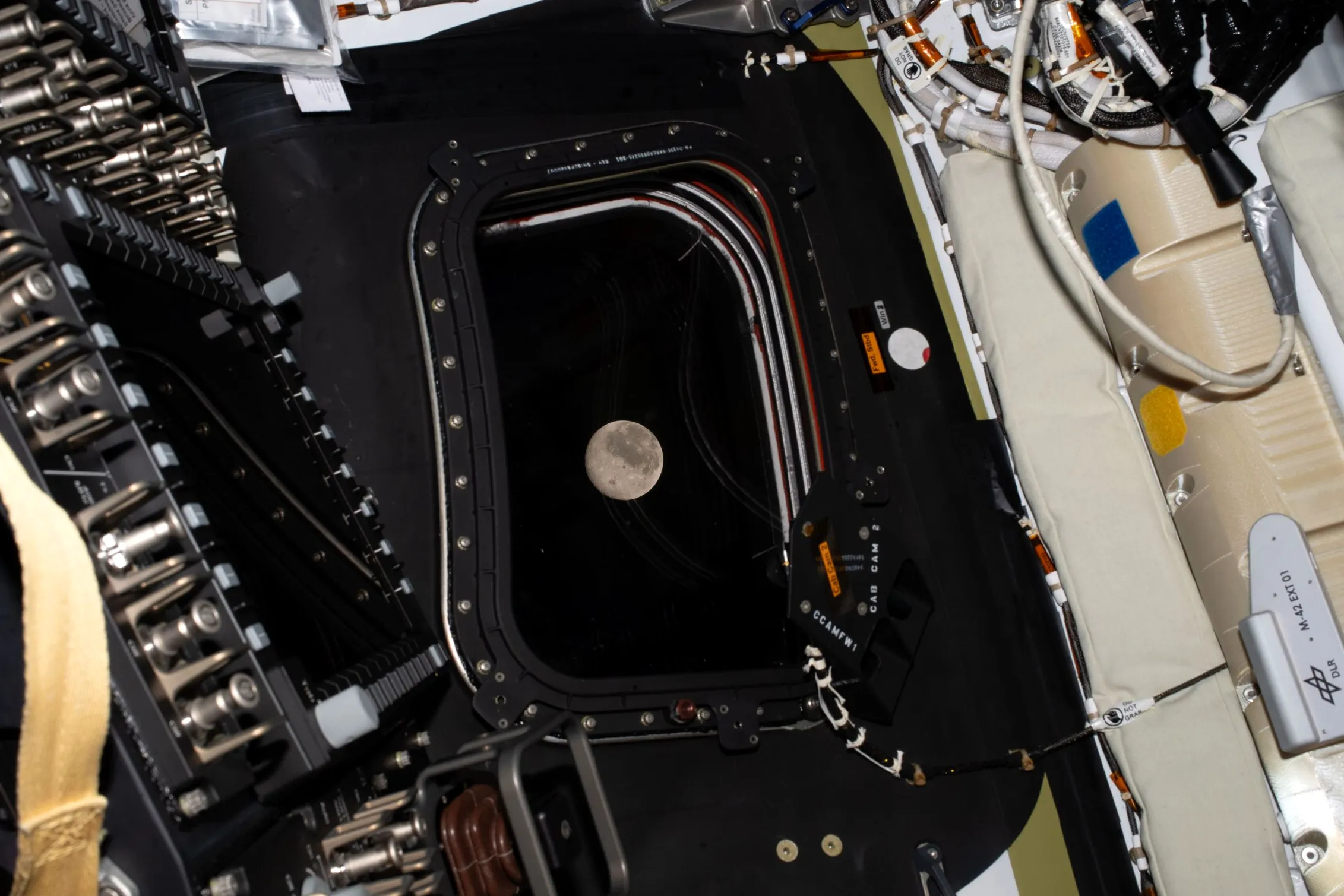
Your lights can fail for reasons that have nothing to do with your house. A wildfire burns for a week in another country. A factory adds nearly a megawatt of rooftop solar to cut grid dependence. Astronauts circle the moon and return safely after pushing human systems farther from Earth than ever before. Strange mix of stories? Not really. They point to the same trend: resilience now means energy systems that keep working when distance, disruption, heat, and uncertainty stack up.
For readers in the emergency preparedness and off-grid power space, that matters right now. The big shift is not just more solar. It is solar paired with survival-minded thinking: redundancy, safer storage, lower fuel dependence, and power where the grid cannot guarantee it.
The quick read: what these three stories are really signaling
- Spaceflight proves the premium on reliable power systems. Artemis II’s safe return underscores a basic truth: when humans operate far from easy rescue, dependable energy and layered backup systems are non-negotiable.
- Commercial rooftops are becoming resilience assets, not just sustainability projects. Kingspan’s new 881-kW rooftop solar array in Illinois adds to a broader push toward direct renewable use and on-site generation.
- Forest fire alerts keep reinforcing the same household lesson. Fire events, like the reported Laos forest fire window from April 3 to April 10, remind you that smoke, evacuation risk, grid strain, and communication failures often arrive together.
The preparedness takeaway is immediate: the market is moving toward distributed power, and households that wait for the next outage to figure out lighting, charging, and refrigeration are already behind.
Why Artemis matters to off-grid power people more than it first appears
A moon mission sounds far removed from your garage power station or bug-out tote. But the survival principle is identical. When astronauts travel farther from Earth than any humans before them and still return safely, the win is not just courage or navigation. It is system design.
- Power must be predictable. Energy budgeting is planned in advance, not guessed at.
- Redundancy is deliberate. Critical functions do not rely on a single point of failure.
- Weight and efficiency both matter. Every watt has a cost, whether that cost is launch mass or the size of the battery you can actually carry.
- Safety margins are real. You do not size for perfect conditions; you size for degraded ones.
That same mindset should shape your home backup plan. Too many people buy a battery because the app looks slick or the AC output number looks big. Then a smoke event, storm outage, or evacuation order hits and they discover the unit cannot keep comms, lighting, medical devices, and food protection running long enough.
Expert tip: if your backup plan depends on sunlight arriving exactly when needed, it is not a complete backup plan. You need enough stored energy to bridge overnight use, poor weather, or smoke-reduced solar charging.
That is why the most useful consumer setups usually start with three layers:
- Layer 1: fast-access lighting and communications backup
- Layer 2: a portable power station sized for your actual loads
- Layer 3: solar input to extend runtime, not magically replace storage
If your current kit is still flashlight-heavy and power-light, review your emergency preparedness gear with the same logic engineers use in hostile environments: identify the critical load, plan the runtime, and build in margin.
The rooftop solar story is bigger than one factory
The Illinois project is not tiny. An 881-kW rooftop solar array spread over about 50,000 square feet is a substantial industrial energy asset, and it marks the company’s third solar project in North America. The headline number is useful, but the deeper signal is more important: companies that manufacture building materials are increasingly treating on-site generation as a core operational tool.
What that means for preparedness-minded readers
- Energy independence is being normalized. Businesses are investing in on-site generation because grid costs, reliability concerns, and sustainability targets now overlap.
- Buildings are becoming power platforms. A roof is no longer just weather protection. It is infrastructure.
- Resilience is shifting from niche to standard practice. Once industrial operators accept distributed generation, homeowners and small property owners tend to follow the same path.
There is also a useful preparedness angle hidden inside the insulation connection. Better insulation and solar do not compete. They multiply each other. If you reduce heat gain and heat loss, your backup system carries a lighter load. That is huge during outages.
- A better-insulated room stays habitable longer when HVAC is offline.
- A refrigerator or freezer in a cooler envelope cycles less, which reduces energy draw.
- Portable solar systems perform better when demand is reduced, not merely when generation is increased.
People often ask the wrong question: “How big a battery do I need?” A smarter question is: “How much can I shrink my emergency load before I buy more battery?”
That is where insulation, weather sealing, blackout curtains, reflective window coverings, and efficient DC devices suddenly become preparedness tools rather than home-improvement trivia.
Forest fire alerts keep exposing the same weak point: power fragility
A forest fire notice may seem geographically distant if it happens in Laos rather than your state. But wildfire behavior and its consequences are global enough that the lessons transfer. Fire does not just threaten flames at your doorstep. It can also trigger:
- Grid instability from damaged lines or preventive shutoffs
- Low solar harvest due to smoke and haze reducing panel output
- Evacuation pressure that forces you to move with limited charging options
- Air quality emergencies requiring fans, purifiers, and sealed rooms
- Communication gaps as towers, routers, and local power fail in sequence
This is the trap many households miss. They buy portable solar expecting sunny-day charging, but wildfire smoke can slash performance right when they need it most. Even thin haze can meaningfully reduce solar production; dense smoke can hammer it. So your backup system for fire season should not be built around panel optimism.
Your fire-season power stack should look like this
- Primary stored power: enough battery capacity for 24 to 72 hours of essentials
- Secondary charging: solar panels for extension when conditions allow
- Tertiary charging: vehicle charging, alternator charging, or generator fallback if safe and legal
- Ultra-low-draw devices: USB fans, rechargeable lanterns, power banks, and radios
For many households, the 72-hour benchmark remains the practical minimum. If you rely on refrigerated medication, CPAP, infant feeding gear, or smoke filtration, your threshold may be higher.
A smart place to audit is your stock of disaster preparedness supplies. If most of it handles food and first aid but not energy continuity, your kit is incomplete for modern outages.
The real trend: resilience is moving from central systems to distributed systems
Put the three stories together and a clear pattern shows up.
- Artemis: mission success depends on integrated, fail-safe systems.
- Rooftop solar expansion: buildings are becoming generators, not passive loads.
- Forest fire warnings: climate-linked disruption keeps stressing centralized infrastructure.
That adds up to a bigger preparedness reality: you should expect more households, worksites, and remote users to build layered power systems that are smaller, cleaner, and more modular than the old generator-only model.
That does not mean generators disappear. It means they are no longer the only serious option. For many use cases, especially apartments, suburban homes, cabins, and evacuation scenarios, a quiet battery-plus-solar setup solves more day-to-day problems:
- No fuel storage rotation
- No indoor carbon monoxide risk from misuse
- Low-noise nighttime operation
- Easy device charging and medical-device support
- Useful even outside disasters for camping, repairs, remote work, and vehicle travel
Still, you need to be honest about limitations. Running a whole house through prolonged bad weather is different from powering lights, phones, radios, and a fridge. Overselling tiny solar kits is one of the worst habits in the backup market.
What to upgrade first if you want real resilience, not gadget clutter
If you want the practical version of this trend report, focus on the boring essentials first. They save lives faster than premium extras.
Priority upgrades that actually move the needle
- Lighting: multiple rechargeable lanterns, headlamps, and room lights with long runtime
- Communications: power banks, radio charging options, and device cables stored in one pouch
- Battery capacity: a power station matched to your critical loads, not your wish list
- Load reduction: insulation improvements, shade management, efficient appliances, and cooler discipline
- Mobility: one grab-and-go charging kit for evacuation
The lighting piece is often underestimated. During smoke events, night outages, and fast evacuations, poor lighting multiplies every other problem. Searching for medicine, reading alerts, moving through a dark stairwell, checking breakers, and avoiding trip hazards all depend on it. Good Emergency Lighting is not a convenience item. It is a risk-reduction tool.
A buyer’s reality check: size your power around critical loads
If you are shopping because these trends have you rethinking your setup, avoid spec-sheet theater. Start with the loads that matter most.
- Phones: roughly 10 to 20 Wh per full charge depending on model and losses
- Rechargeable lanterns: often modest draw, but runtime varies wildly
- CPAP: can range significantly depending on humidifier and voltage conversion
- Mini fridge or efficient refrigerator support: highly variable because startup surges and cycling behavior matter
- Fans and small purifiers: critical in smoke and heat, and often more manageable than air conditioning
Write down your must-run items. Estimate watt-hours for one day, then multiply by at least two or three for a realistic emergency reserve. After that, ask whether your solar input can replace even half that during poor conditions. If the answer is no, you either need more storage, lower loads, or another charging path.
The preparedness rule: buy for your worst likely week, not your best sunny weekend.
Where this trend is headed next
Expect more overlap between mainstream solar news and preparedness buying decisions. That is the direction of travel. As more factories, warehouses, and commercial roofs add generation, and as more climate-driven disruption hits transmission and local service, households will increasingly think like mission planners: secure essential functions first, then extend endurance.
The people who adapt fastest will not necessarily own the biggest systems. They will own the best-matched systems:
- Storage sized to real needs
- Solar used as endurance support
- Insulation and efficiency treated as part of backup planning
- Portable gear ready for shelter-in-place or evacuation
That is the quiet lesson connecting astronauts, rooftops, and forest fire alerts. Resilience is no longer one product category. It is a design choice. Make that choice before your next outage, smoke event, or evacuation notice forces it on you.