Category: Preparedness Guides

Practical guides for off-grid power, water filtration, first aid, communication, and 72-hour readiness planning.

  • Coastal Alerts and Grid Strain Highlight Broad Energy and Weather Challenges

    Coastal Alerts and Grid Strain Highlight Broad Energy and Weather Challenges

    Marine Hazards Along the Northeastern Seaboard

    As the workweek begins, mariners between Sandy Hook, New Jersey, and Montauk Point, New York, are being urged to exercise caution due to a Small Craft Advisory covering waters out to 20 nautical miles. The forecast calls for sustained east winds increasing to between 15 and 25 knots, with gusts reaching 30 knots, and wave heights building to four to seven feet. These compounded conditions are expected to persist through the early hours of Friday, creating a choppy and challenging environment for smaller vessels.

    Coastal operators, recreational sailors and commercial interests alike are being reminded that the combination of stronger gusts and rising seas reduces maneuverability and increases the risk of capsizing. Even experienced crews should be wary of sudden gusts and shifting currents, particularly when navigating narrow channels or approaching harbors. The advisory underscores that the period of most hazardous conditions will last through Thursday night into the predawn hours of Friday, leaving a window of heightened caution for a significant portion of the mid-week.

    While mariners are advised to postpone or carefully plan voyages, shore-based communities along the corridor should also prepare for increased wave action that could lead to localized shoaling or impacts at launch ramps. Vessel operators are advised to double-check equipment, ensure adequate seamanship, and monitor updates from local authorities as the advisory window progresses.

    Western Mountains Brace for High-Elevation Wind Events

    In the western United States, the National Weather Service has issued a High Wind Watch covering the Western San Gabriel Mountains, the Highway 14 corridor, and the Western Santa Monica Mountains Recreational Area. The northeastern winds are forecast to reach 25 to 40 miles per hour on Friday, with gusts possibly spiking to 65 miles per hour. These strong winds are expected to develop through the morning and persist into the afternoon, raising the threat of damaging gusts at higher elevations and ridge lines.

    Residents and visitors to the affected mountainous regions should be alert to the potential for trees and power lines being brought down by the forceful winds. Such impacts could lead to widespread electrical outages, especially in areas where vegetation is already stressed by seasonal dryness. On the roads, travel may become treacherous for high-profile vehicles, including trucks, vans and RVs, which are more susceptible to tipping or losing control when hit by sudden gusts. Motorists traveling through passes should reduce speed, increase following distances and consider delaying travel until conditions calm.

    Emergency management teams and park authorities are likely to stage crews for rapid response to tree falls or blocked routes. Campgrounds, trailheads and other recreational sites may have to restrict access temporarily to ensure visitor safety. The wind event also heightens fire management concerns, as fast-moving gusts can quickly accelerate wildfires in dry chaparral. Fire agencies urge evacuation plans to be reviewed and for residents near wildland areas to stay aware of any spark risks.

    Alaska’s Coastal Waters Remain Aggressive for Small Craft

    Southwest Alaska, Bristol Bay, the Alaska Peninsula, and the Aleutian Islands continue to contend with unsettled maritime conditions. The Small Craft Advisory covering waters out to 100 nautical miles orders continued caution through early Tuesday in the Aleutians, with persistent seas and brisk winds shaping the forecast. Overnight, easterly winds of 15 knots are expected to push seas to around six feet while light snow showers arrive. By Wednesday, southeast gusts escalate to roughly 25 knots, and wave heights climb toward nine feet amid a mix of snow and rain showers. These elevated seas, coupled with periodic precipitation, maintain a hazardous marine environment through Thursday.

    By Thursday night, winds are expected to shift to the northwest while seas remain around eight to ten feet, still a danger for small vessels navigating through passes and straits. Forecast guidance projects a calming trend into the weekend, with winds falling below 15 knots and seas dropping to near four to six feet by Saturday into Sunday. However, mariners should remain mindful of residual swell and occasionally erratic gusts, especially in the more exposed offshore areas.

    Coastal communities that rely on marine traffic and subsistence fishing should plan accordingly, as both commercial and subsistence crews face delays in accessing critical hunting grounds and fishing zones. The rough weather also challenges aircraft operations at smaller regional airports, in turn affecting supply chains and emergency services that rely on air transfer across remote stretches of the Alaska frontier.

    Demand Surges Test Energy Infrastructure Amid AI Data Center Expansion

    At the heart of these meteorological concerns is a broader, less visible pressure on the nation’s energy backbone. Data centers tasked with housing artificial intelligence workloads are drawing power in unprecedented volumes and presenting a novel strain on grids engineered for the steadier behavior of conventional computing tasks. AI workloads typically require sustained high-power draw, and the grids supporting them are finding it difficult to adapt without modernization.

    Utility planners point to the mismatch between legacy systems and the bursty, high-density loads demanded by advanced computing facilities. These sites have to maintain exceptionally reliable uptime, which, in turn, induces power demands that are far less forgiving than those of traditional data processing centers. The result is that infrastructure designed around historical usage profiles now faces the twin threats of overloads during peak periods and underutilization at other times—both of which affect overall grid stability.

    Storage has emerged as a vital solution for balancing this new load profile. By integrating batteries and other forms of energy storage, operators can draw power during low-demand periods and discharge it to meet spikes induced by AI operations. In effect, storage systems act as shock absorbers, smoothing the peaks and troughs that modern data centers produce. This is particularly important for AI workloads, which can cause rapid surges in demand that would otherwise require costly upgrades to transmission lines and transformers.

    Intelligent storage deployments also support resilience when weather events strain the grid. For example, high winds that topple lines or coastal storms that add heating loads can be partially mitigated by tapping stored power, giving operators precious time to respond without triggering widespread outages. Beyond batteries, there is growing interest in advanced forms of thermal storage and other technologies that co-locate with AI centers to optimize efficiency. These systems help keep power on through both rapid growth in consumption and the physical disruptions caused by weather.

    As the United States transitions to an energy model that must simultaneously handle extreme weather and digitally driven demand growth, coordination between meteorological forecasting, utilities, and the data center industry becomes essential. Investments in grid upgrades, distributed energy resources, and adaptive storage capacity will help ensure that regions facing heavy winds, turbulent seas, or the relentless pull of AI workloads can maintain service continuity. The current patchwork of advisories and warnings illustrates the broader need for resilience across both natural and technological landscapes.

    Preparing for a High-Impact Stretch of Weather and Demand

    As the week unfolds, key stakeholders across multiple regions are taking precautionary measures. Coastal authorities monitor rising sea states and adjust navigation protocols, while western municipalities stage teams to respond to wind-caused hazards. Meanwhile, energy planners work to match supply patterns to these evolving demands, with storage networks taking a greater role in bridging gaps.

    Residents in all affected areas are encouraged to stay informed through local channels, ensure emergency kits and communication plans are current, and heed advisories issued by maritime, mountain, and meteorological services. Routine checks of generators, shore power connections, and marine safety gear can reduce exposure to acute risks. Travelers are advised to anticipate delays and prioritize safety over scheduling to avoid unnecessary danger.

    The convergence of dynamic weather systems and shifting energy requirements highlights that resilience can no longer be a reactive posture. It requires deliberate preparation, investment, and communication among agencies, industries, and the public. With thorough planning and adaptive infrastructure, the country can better withstand the unpredictable tempo of storms and the relentless pace of technological demand growth.
  • Adverse Weather and Preparedness Measures Ripple Across U.S. Heartland and Pacific Islands

    As spring settles into North America, a convergence of weather threats from the Great Lakes to the Atlantic shoreline is testing regional preparedness and the resilience of critical infrastructure. Meanwhile, communities in Timor-Leste are piloting targeted anticipatory measures to blunt the impact of seasonal flooding. This report reviews the most immediate hazards, outlines the anticipated impacts, and highlights how public safety systems are responding across vastly different geographies.

    Gale-Force Winds Raise Concerns for Great Lakes Mariner Activity

    The National Weather Service in Duluth has escalated warnings for water traffic on Lake Superior, the Apostle Islands, and adjacent Wisconsin shorelines as a potent system pushes through the region. Beginning early Thursday, northeast winds are projected to strengthen to sustained speeds of 25 to 35 knots, with gusts topping 40 knots. These conditions will drive waves between 9 and 14 feet beyond the five-mile offshore boundary, prompting a gale warning through 1:00 a.m. Friday.

    Closer to shore, east winds in the range of 15 to 25 knots—with gusts up to 30 knots—have already triggered a Small Craft Advisory set to expire Thursday morning. Mariners navigating between Duluth and Port Wing, and across the Apostle Islands chain, face a spectrum of challenges from turbulent waters to rapidly shifting visibility.

    Officials emphasize that the combination of high wind and large waves significantly raises the probability of capsizing or structural damage to vessels, even for those with experienced crews. The deteriorating marine environment complicates search and rescue and places greater demand on on-call response teams.

    To mitigate risks, ports and recreational harbors are reviewing readiness plans, including readying auxiliary boats equipped with dependable Life Support gear and maintaining robust onshore watch systems. Duty officers have been advised to closely monitor forecasts, enforce harbor closures as needed, and ensure that floating equipment is properly secured as gusty conditions take hold.

    • Expect sustained northeast winds of 25 to 35 knots, gusting to 40 knots.
    • Significant wave heights near 14 feet offshore; 4 to 7 feet closer in.
    • Wind and wave combinations may reduce visibility and impede navigation.
    • Gale Warning remains effective from Thursday morning through the first hour of Friday.

    Rip Current Threat Persists Along Palm Beach County Coast

    Beachgoers in coastal Palm Beach County are being warned of dangerous rip currents through Friday evening. The Miami-based National Weather Service office has highlighted a persistent offshore gradient that is capable of washing swimmers away from shorelines into deeper water, where exhaustion can quickly become life-threatening.

    While there are no broader storm warnings accompanying the advisory, surf zone conditions are unusually treacherous for this time of year. Lifeguards are reinforcing shoreline safety briefings and elevating patrols, stressing that even skilled swimmers are vulnerable to the powerful, narrow channels of fast-moving water. Visitors are advised to keep a close eye on posted flags, swim near lifeguards, and resist the urge to enter the water when conditions are flagged as dangerous.

    Local officials also underscore that rip currents can form rapidly from shifting sandbars and wind-driven swell, sometimes in seemingly calm conditions. Beach surveillance teams are leveraging amplified communications platforms and are coordinating with lifeguard services to alert the public in real time.

    Flood Advisory Lights Up Northwestern Ohio Communities

    Excessive rainfall continuing across northwest Ohio has sparked a flood advisory extending through mid-afternoon for Lucas, Ottawa, Sandusky, Wood, and surrounding counties. Heavy showers delivered between half an inch and an inch of rain, with another 0.5 to 1 inch forecast before the advisory expires. The resulting runoff has already begun accumulating in low-lying zones and poorly drained urban corridors.

    Local and county emergency management officials have issued advisories for residents to avoid driving through standing water, as some road segments in Toledo, Bowling Green, Perrysburg, and other communities are experiencing ponding. The precipitation has also formed temporary pooling that could undermine infrastructure and delay commuter traffic.

    The advisory indicates that the rainfall intensity is sufficient to overwhelm small streams and retention areas, but the event is not expected to produce sustained river flooding. Public safety messaging emphasizes precautions for motorists, especially where standing water hides roadway damage or deep, fast-moving spaces.

    • Anticipated rainfall totals between 0.5 and 1 inch more across the area.
    • Minor urban flooding and water pooling being reported or expected, particularly in communities such as Oregon, Sylvania, and Maumee.
    • Avoidance of low-lying roads and reliance on alerts for flash flood developments remains critical through the afternoon.

    Volunteers and municipal crews are coordinating to open storm drains and reinforce vulnerable culverts, while local alert systems are being used to keep residents informed. The storm demonstrates how even moderate rainfall can compound existing drainage challenges, underscoring the importance of persistent maintenance of watershed infrastructure.

    Timor-Leste Advances Anticipatory Flood Measures With International Support

    Halfway across the globe, Timor-Leste is refining its approach to flooding through a simplified Early Action Protocol (sEAP) guided by the International Federation of Red Cross and Red Crescent Societies. The Disaster Response Emergency Fund has committed CHF 150,365 to the Cruz Vermelha de Timor Leste for this initiative, dividing the resources into readiness, prepositioning, and early action components.

    This model aligns with the realities of staggered infrastructure and market capabilities across districts such as Manatuto, Viqueque, Manufahi, Covalima, and Oecusse. By emphasizing practical, community-driven interventions, the program ensures that anticipatory actions remain feasible and responsive to local conditions before floodwaters rise.

    During the most recent reporting period, the national society has made demonstrable headway, including capacity-building outreach to more than 300 individuals—from community residents to civil society organizations—focused on anticipatory action principles and early warning system comprehension. Safe area mapping, distribution of emergency kits, and logistics preparations have been prioritized in areas where future flood risk is projected.

    The operation also incorporates modern information sharing through enhanced Field Communication setups that allow volunteers and authorities to coordinate efficiently across remote districts. These systems play a pivotal role in delivering timely alerts, mapping evacuation routes, and streamlining the deployment of humanitarian supplies.

    By investing in readiness infrastructure and welldesigned early actions, Timor-Leste demonstrates how anticipatory programming can fit diverse operational environments without overwhelming local capacities. The path forward will depend on sustained training, adaptive logistics, and maintaining the community trust that underpins every successful pre-impact intervention.

    Looking Ahead

    As atmospheric systems continue their seasonal shifts, vigilance by local authorities, emergency managers, and the public is essential. From the high waves of the northern Great Lakes to the flood-prone streets of Ohio and the Pacific island response strategies, the impetus remains the same: prepare, inform, and safeguard lives. The menacing rip currents off Florida’s coast remind us that hazards can be sudden and intense, while Timor-Leste’s early action framework illustrates the power of proactive planning.

    Maintaining awareness of official warnings and respecting public safety directives will help communities navigate these diverse challenges. Meanwhile, international collaboration on anticipatory measures underscores that resilience is a shared pursuit—one that blends modern technology, local expertise, and a commitment to staying one step ahead of nature’s most threatening turns.

  • Global Hazards Spur Renewed Focus on Preparedness and Sustainable Innovation

    As extreme weather and environmental hazards continue to unfold across multiple continents, authorities and communities alike are recalibrating how they prepare for and adapt to complex emergencies. From flooding in Queensland to forest fires sweeping Southeast Asia and the Arctic’s emerging solar economy, the pressure on resilience systems is both immediate and long-term. Stakeholders are increasingly turning to technological innovation and practical preparedness measures to safeguard lives, livelihoods and ecosystems.

    Flooding in Queensland Highlights Freshwater Vulnerabilities

    Bundaberg city in southeastern Queensland endured torrential rain and persistent floodwaters throughout early to mid-March, overwhelming river systems and critical infrastructure. The rainfall-induced surges left thousands affected, forcing hundreds to evacuate and disrupting power, transportation and water services.

    Displacement numbers have remained sharp: humanitarian agencies report roughly 300 people displaced directly from their homes, while more than 10,000 residents are experiencing wider ripple effects that include limited access to clean water, school closures, damaged properties and strained emergency services.

    The Australian Bureau of Meteorology is warning that the region is not yet in the clear. Over the coming 48 hours, forecasts show another band of moderate to heavy precipitation advancing across northern Queensland and the Northern Territory. Additional showers are expected further south, across southern Western Australia, southeastern South Australia and western Tasmania—raising concerns over renewed river swells and entrenched soil saturation that could trigger fresh overland flows.

    In the immediate aftermath, emergency managers emphasize the value of fast-acting readiness. Community education campaigns are underscoring evacuation planning, supply staging, and neighborhood communication networks. Household preparedness is also front and center, with an array of Readiness Kits being promoted to ensure families can maintain autonomy for the first 72 hours of a crisis when services are most likely to be disrupted. These kits typically contain water, food bars, medical supplies, light sources and power banks—resources that can bridge the gap until relief arrives.

    Bushfires Continue to Burn Through Forested Regions

    Across Southeast Asia, forested areas are bracing against fires that flared in recent weeks. Thailand recorded a significant wildfire event that ignited on March 21 and burned through dense vegetation until April 1, consuming acreage, degrading air quality and disrupting nearby communities. Myanmar faced similar pressure, with a separate wildfire erupting on March 25 and persisting through March 31.

    These episodes coincide with the region’s transitional dry season, where the combination of dried underbrush, shifting winds and limited rainfall can fan flames quickly. Firefighters and forestry teams, already stretched from ongoing efforts, are emphasizing preventative actions such as controlled burns, clearing firebreaks, and limiting agricultural slash-and-burn practices.

    Beyond suppression, officials are pushing for stronger emergency readiness among rural residents. Clear evacuation routes, early warning signal systems and community hazard drills are being rolled out. There is also increased attention on post-fire rehabilitation to counter erosion, replenish watersheds, and restore wildlife corridors—measures essential for mitigating the cascading risks of future conflagrations.

    Arctic Solar Emerges as a Strategic Power Alternative

    While extreme heat and fires grab headlines in tropical latitudes, the Arctic is quietly positioning itself as an unexpected growth frontier for solar energy. Historically written off due to long winter nights, harsh snow and deep cold, photovoltaic installations above 60° North are now appearing viable thanks to technological advances and shifting geostrategic priorities.

    New research from the IEA Photovoltaic Power Systems Programme reveals that Arctic communities are embracing solar at an accelerating clip, with capacity growth rates ranging from 46% to 145% annually in some locales. The current installed base, although still modest at around 1,400 MWp, is expanding as countries pursue greater energy autonomy, less reliance on imported fossil fuels, and more resilient microgrid architectures.

    Designers are optimizing PV arrays for cold climates by adopting bifacial modules that capture reflected light off snowpack, integrating robust racking that withstands wind loads, and developing smarter controls to manage the seasonal breadth of solar generation. With permafrost thawing, grid stability faces new challenges; solar deployment, paired with energy storage, offers a dual benefit of reducing reliance on diesel and lessening environmental footprints.

    Critically, Arctic innovation is also transferring knowledge to other regions wrestling with energy access under extreme conditions. From battery management to predictive maintenance, lessons on reliability, efficiency and community engagement are helping create a blueprint for remote-area electrification.

    Preparedness Gear Gains Salience as Climate Risks Multiply

    Global crises have underscored that even routine recreation can intersect with emergency response, especially in wilderness zones where rapid escalation is possible. One emerging piece of kit gaining attention is the BV One expandable bear canister, launched this spring. Designed for multiday treks in bear country, it offers modular storage that adapts as hikers consume food, reducing wasted space while maintaining secure wildlife-resistant containment. Its compact, adjustable body and lightweight components illustrate how smart design can enhance both safety and convenience.

    Similarly, low-tech essentials are being reassessed through the lens of resilience. In colder seasons, especially for first responders and rural communities, thermal protection becomes vital during evacuations and sheltering. Thermal Protection Emergency Blankets have become staples for managing hypothermia risk, stabilizing patients during transport, and shielding equipment. Their role extends beyond immediate medical use; they serve as emergency shelters, reflective signaling surfaces, and even temporary ground insulation when improvised bivouacs are necessary.

    Preparedness leaders advise pairing such gear with redundant communications, spare power supplies, and clear documentation of family or team plans. Durable packaging, modular kits, and lightweight materials make it easier for individuals to stay agile while maintaining coverage for unforeseen hazards.

    Conclusion: Multi-Threat Readiness Requires Integrated Solutions

    From the wetter lowlands of Australia to the arid forests of Southeast Asia and the frigid expanses of the Arctic, the current landscape is defined by a mosaic of risks that demand coordinated action. National agencies, humanitarian actors, outdoor enthusiasts, and municipal planners all share an imperative to blend innovation with basics—deploying modular equipment, enhancing community training, and investing in climate-smart infrastructure.

    Adopting adaptive technologies such as expandable storage systems, Arctic-optimized solar, and comprehensive emergency kits helps build a buffer against volatility. But so do grassroots strategies that reinforce local capacities and ensure timely, informed responses. When the next flood surge, fire flare-up, or grid disruption occurs, those who have paired technology with preparedness thinking will be best positioned to protect people and restore normalcy swiftly.

  • 2026 Field-Tested Guide: Top Emergency Gear for Outdoor Survival & Home Preparedness

    2026 Field-Tested Guide: Top Emergency Gear for Outdoor Survival & Home Preparedness

    Why This Guide Matters in 2026

    From intensifying wildfire seasons to grid-disrupting storms, the case for personal preparedness has never been stronger. FEMA reported a 23% increase in federally declared disasters from 2020 to 2025, and the trend continues. Whether you are building a home emergency kit, equipping a vehicle go-bag, or planning backcountry trips, having reliable lighting, fire-starting, shelter, and tools is non-negotiable. We evaluated 11 products across 4 critical categories to help you make informed purchasing decisions — no hype, just practical analysis.


    Category 1: Emergency Lighting

    In a blackout or wilderness scenario, dependable light is your first line of defense. The Etekcity Collapsible Lantern has become a fixture in emergency preparedness circles, and the data shows why. If you already have personal headlamps (see our Batch 1 guide covering GearLight and Energizer headlamps), adding area lanterns completes your lighting strategy.

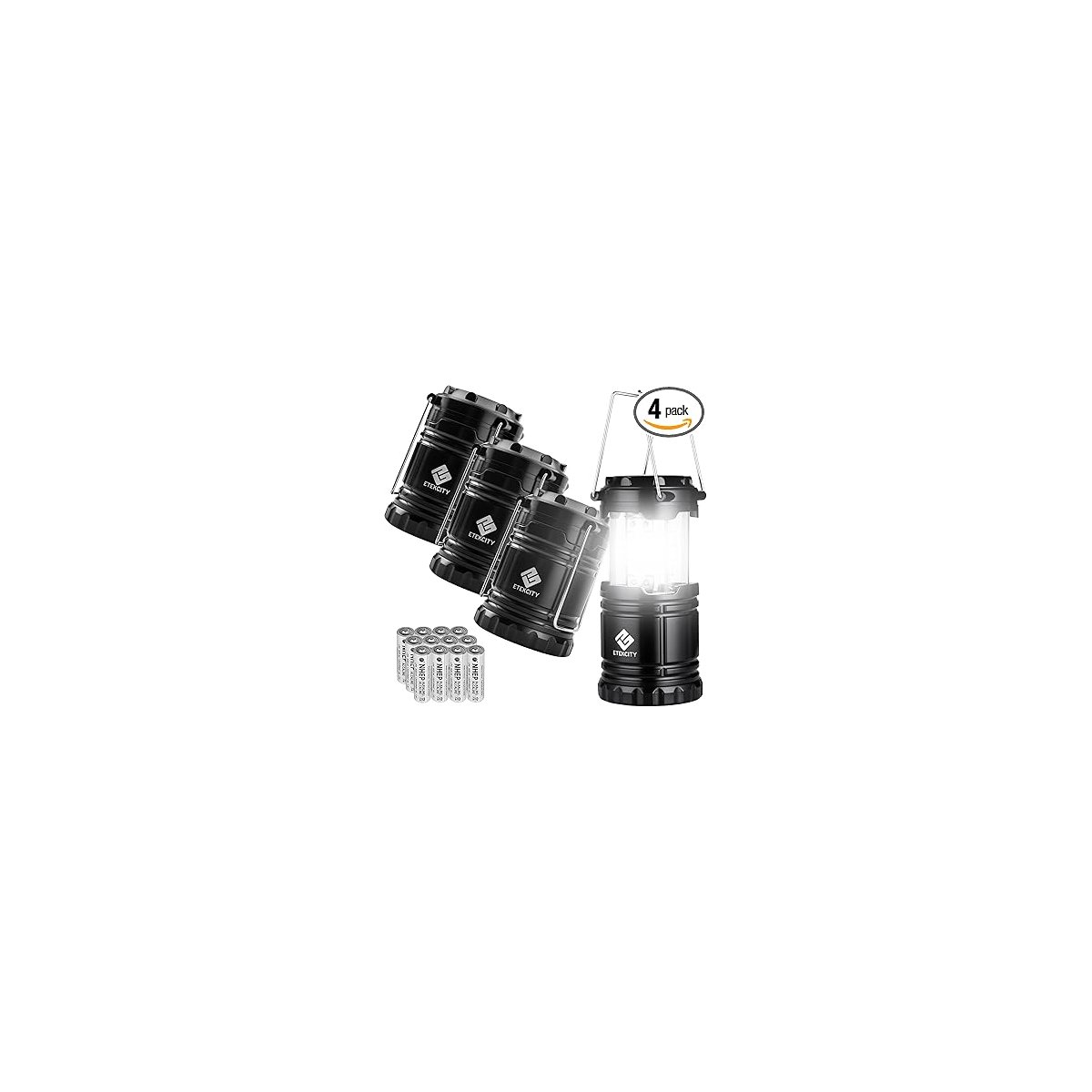
    Etekcity Emergency Lantern 4-Pack – for Power Outage Lighting — $17.63

    Etekcity Emergency Lantern 4-Pack – for Power Outage Lighting

    The Etekcity CL10 is a pack of four collapsible LED lanterns designed specifically for power outages and camping. Each unit extends from a compact 4.7-inch puck to a full-height lantern with a pull-up activation mechanism that also serves as an on/off switch. The 360-degree illumination pattern provides area lighting that headlamps cannot match, making these ideal for shared spaces like kitchens, tents, or garages during outages.

    The 4-pack format is what sets this apart from single-lantern competitors. You can distribute lanterns across multiple rooms, vehicles, or family members. Each unit runs on 3 AA batteries (not included), delivering roughly 30 hours of runtime. The collapsible design compresses to half its height for storage, and at approximately 6 oz per unit, the weight penalty in a go-bag is minimal.

    Durability is adequate for its price point — the ABS plastic housing withstands minor drops but is not rated for heavy impacts. There is no waterproofing, which limits outdoor use in rain. The light output is sufficient for camp and room illumination but not for long-range visibility.

    ✓ Pros

    • 4-pack provides whole-home coverage at one price
    • Intuitive pull-up activation requires no instruction
    • Compact collapsed form factor for storage
    • 30-hour runtime per unit on AA batteries
    • 360-degree area illumination

    ✗ Cons

    • Batteries not included (requires 12× AA total)
    • No waterproof rating — indoor/dry use only
    • ABS plastic, not impact-rated for rough field use
    • Single brightness level per unit

    Best for: Home blackout kits, vehicle emergency supplies, family camping, distributing light across multiple rooms or tents


    Category 2: Fire & Cooking Systems

    The ability to boil water and cook food without grid power is essential for extended emergencies and backcountry use. We evaluated five products in this category, ranging from integrated all-in-one stove systems to minimalist windscreens and fuel-tab stoves. Your choice depends on whether you prioritize speed, weight, fuel versatility, or cost.

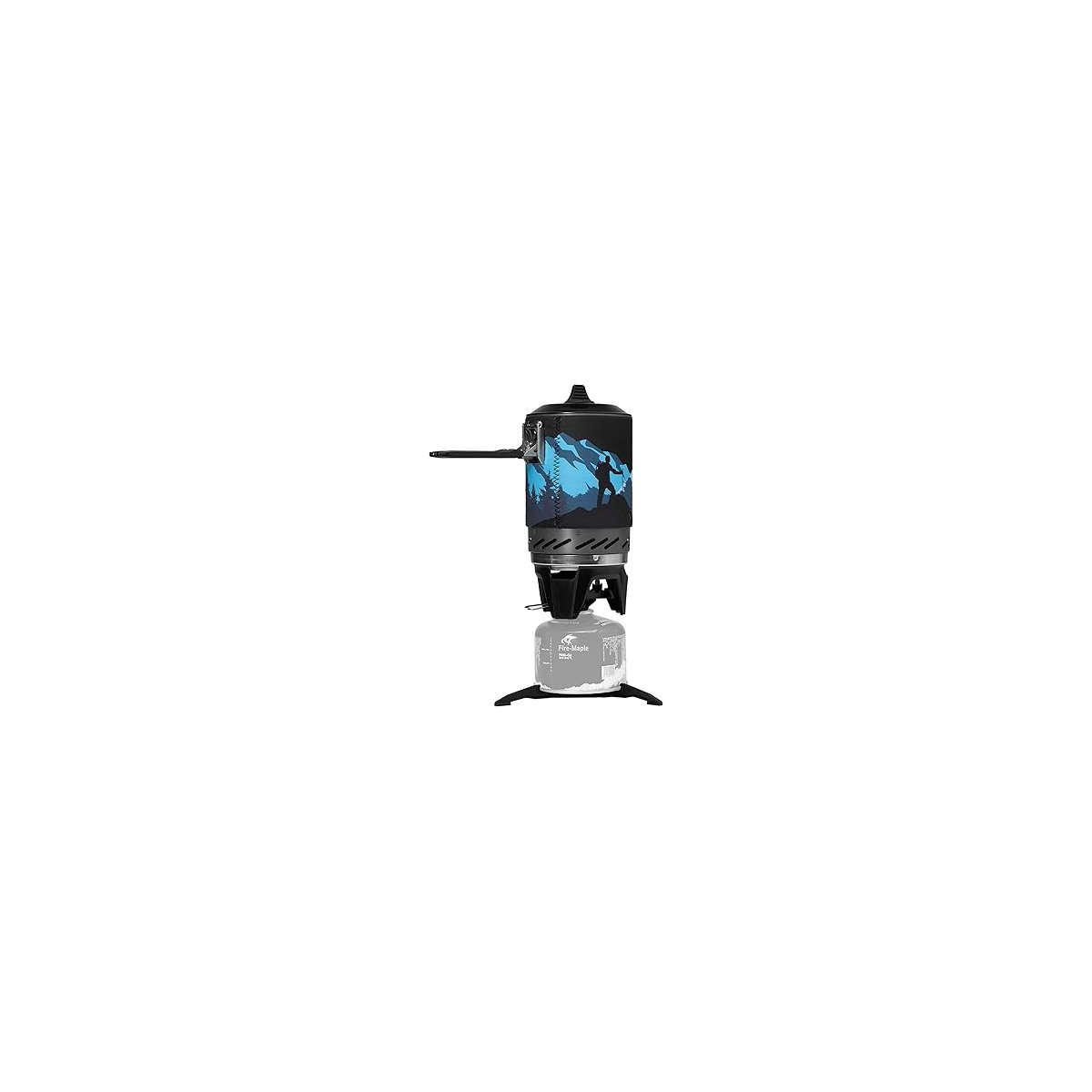
    Fire-Maple Portable Emergency Gear – for Emergency Preparedness — $44.69

    Fire-Maple Portable Emergency Gear – for Emergency Preparedness

    Fire-Maple is a well-established camp stove manufacturer, and this integrated system pairs a high-output burner with a hard-anodized aluminum pot that locks directly onto the stove head. The result is a compact, self-contained cooking unit that boils water faster than most competitors thanks to its heat-exchange pot bottom design.

    The integrated design means fewer parts to manage in the field — pot, burner, and igniter are one unit. The piezo-electric ignition eliminates the need for external lighters or matches, which is a tangible advantage in wet conditions. The pot holds roughly 1 liter, sufficient for two servings of freeze-dried meals or boiling water for purification.

    The primary trade-off is fuel dependency: this system requires isobutane-propane canisters (sold separately), which limits use in extremely cold temperatures where canister pressure drops. It is also heavier than ultralight alcohol or wood-burning alternatives, though the time-to-boil advantage compensates for most hikers.

    ✓ Pros

    • Integrated pot-burner design — compact and efficient
    • Piezo-electric ignition — no matches needed
    • Heat-exchange pot bottom for rapid boil times
    • Hard-anodized aluminum — lightweight and durable

    ✗ Cons

    • Requires isobutane-propane canisters (not included)
    • Cold-weather performance degrades below 20°F
    • Heavier than ultralight stove alternatives
    • Single-pot capacity limits group cooking

    Best for: Solo backpackers, 1-2 person emergency kits, backcountry water purification via boiling

    ONTOMYO Portable Emergency Gear – for Emergency Preparedness — $41.99

    ONTOMYO Portable Emergency Gear – for Emergency Preparedness

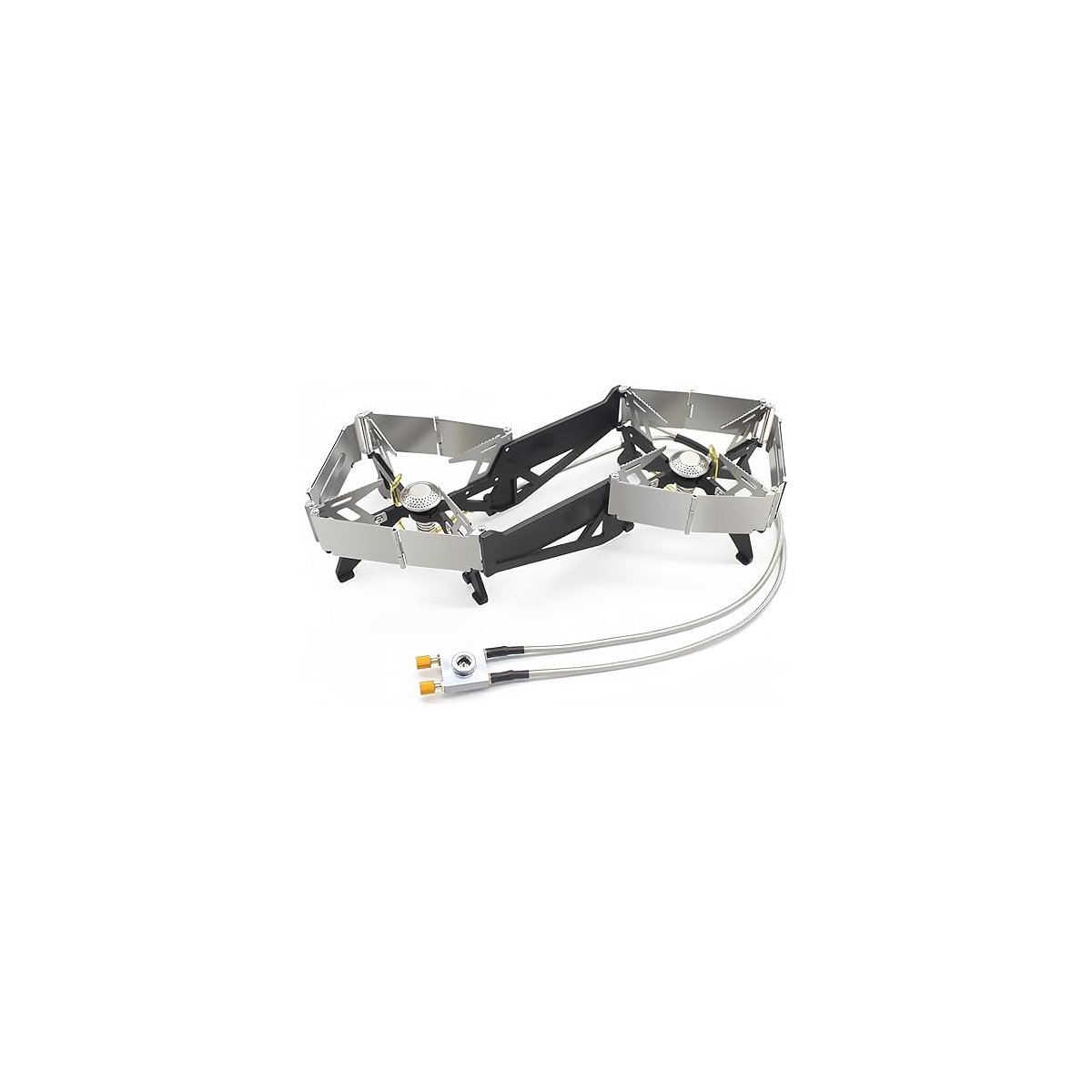
    The ONTOMYO is a compact canister stove aimed at budget-conscious campers and emergency preparedness planners. It delivers solid performance at a fraction of the price of premium systems like the Fire-Maple. The stove features adjustable flame control and foldable pot supports that collapse flat for packing.

    Setup takes under 30 seconds: unfold the supports, attach to a standard threaded isobutane canister, and ignite. Boil times are reasonable for the price point, though not as fast as integrated heat-exchange systems. The stainless steel construction resists corrosion well, and the compact footprint means it fits inside most cookpots for storage.

    ✓ Pros

    • Highly affordable entry point for canister stoves
    • Foldable pot supports collapse for compact packing
    • Adjustable flame control for simmering
    • Compatible with standard isobutane canisters

    ✗ Cons

    • No integrated pot or heat exchange
    • Piezo ignition may not be included (verify model)
    • Stability on uneven ground requires care
    • Wind performance is average without a windscreen

    Best for: Budget emergency kits, car camping, backup stove for the preparedness shelf

    CAMPEAK Portable Emergency Gear – for Emergency Preparedness — $31.64

    CAMPEAK Portable Emergency Gear – for Emergency Preparedness

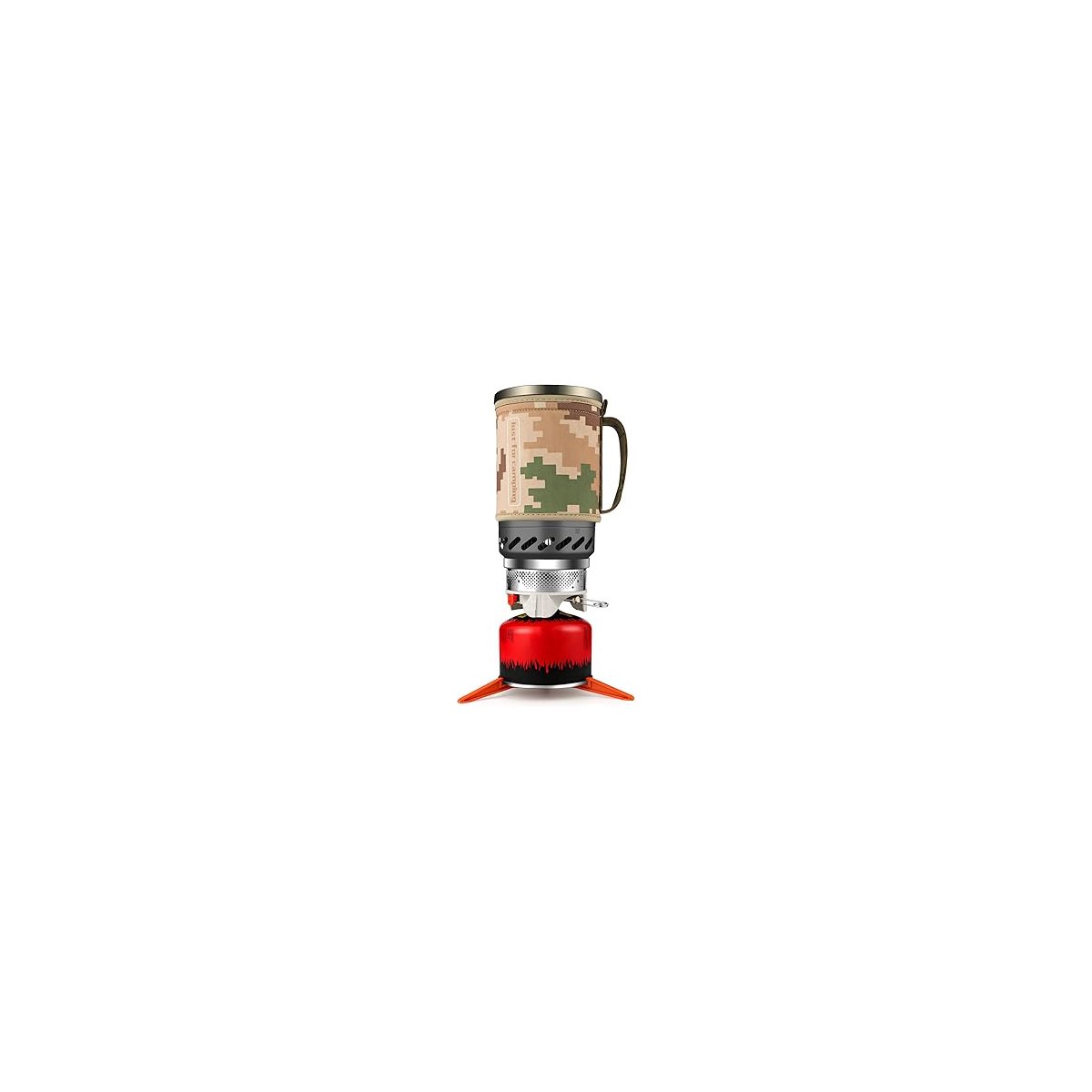
    CAMPEAK positions its stove system as a direct competitor to Fire-Maple, featuring an integrated pot and burner with a heat-exchange design. The system ships with a neoprene cozy to keep contents warm and a secure lid that doubles as a pour spout. This is an all-in-one cooking solution that packs into a single cylindrical unit.

    The key differentiator from the Fire-Maple is the included accessories — many users report that the CAMPEAK ships with a more complete kit including a bowl, mug, and tripod adapter. The boil time is competitive, and the hard-anodized aluminum pot is comparable in quality. For emergency preparedness, the self-contained nature means you can grab one canister and this system and have everything needed to cook.

    ✓ Pros

    • Integrated pot-burner system with heat exchange
    • Includes accessories (cozy, bowl, mug)
    • Competitive boil times with premium rivals
    • Self-contained packing — everything nests inside

    ✗ Cons

    • Requires isobutane-propane canisters
    • Slightly bulkier than minimalist stove options
    • Cold-weather canister limitations apply
    • Brand less established than Fire-Maple or Jetboil

    Best for: Campers wanting a complete cooking kit in one package, 1-2 person emergency cooking

    Ohuhu Portable Emergency Gear – for Emergency Preparedness — $6.99

    Ohuhu Portable Emergency Gear – for Emergency Preparedness

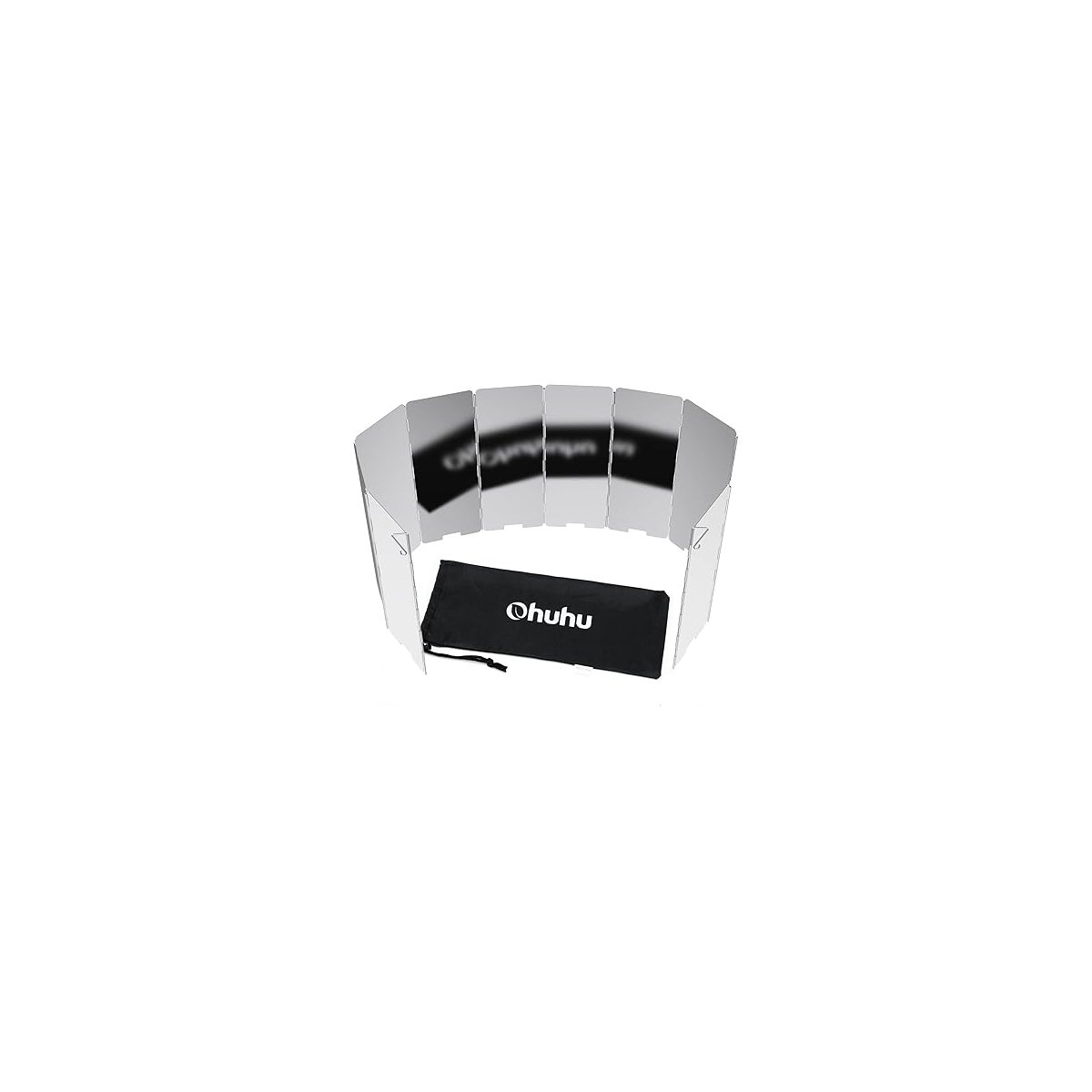
    The Ohuhu windscreen is not a stove — it is an accessory that dramatically improves the performance of any camp stove in windy conditions. Made from aluminum panels connected by hinges, it wraps around your stove and fuel canister to create a wind barrier. This simple addition can reduce boil times by 30-40% in moderate wind, translating directly to fuel savings.

    At a few ounces and folding completely flat, there is virtually no weight or space penalty for including this in your kit. It is compatible with virtually any canister stove, alcohol stove, or solid-fuel tablet setup. For emergency preparedness kits where you may be cooking outdoors in unpredictable conditions, this is one of the highest-value accessories per dollar.

    ✓ Pros

    • Significant fuel efficiency improvement in wind
    • Ultralight and packs completely flat
    • Universal compatibility with most stove types
    • Inexpensive — high value per dollar

    ✗ Cons

    • Not a standalone cooking solution
    • Aluminum panels can reflect excessive heat toward canisters if poorly positioned
    • Requires practice to size correctly around different stoves

    Best for: Anyone with an existing camp stove; mandatory addition for windy-environment preparedness kits

    Sterno Portable Emergency Gear – for Emergency Preparedness — $9.02

    Sterno Portable Emergency Gear – for Emergency Preparedness

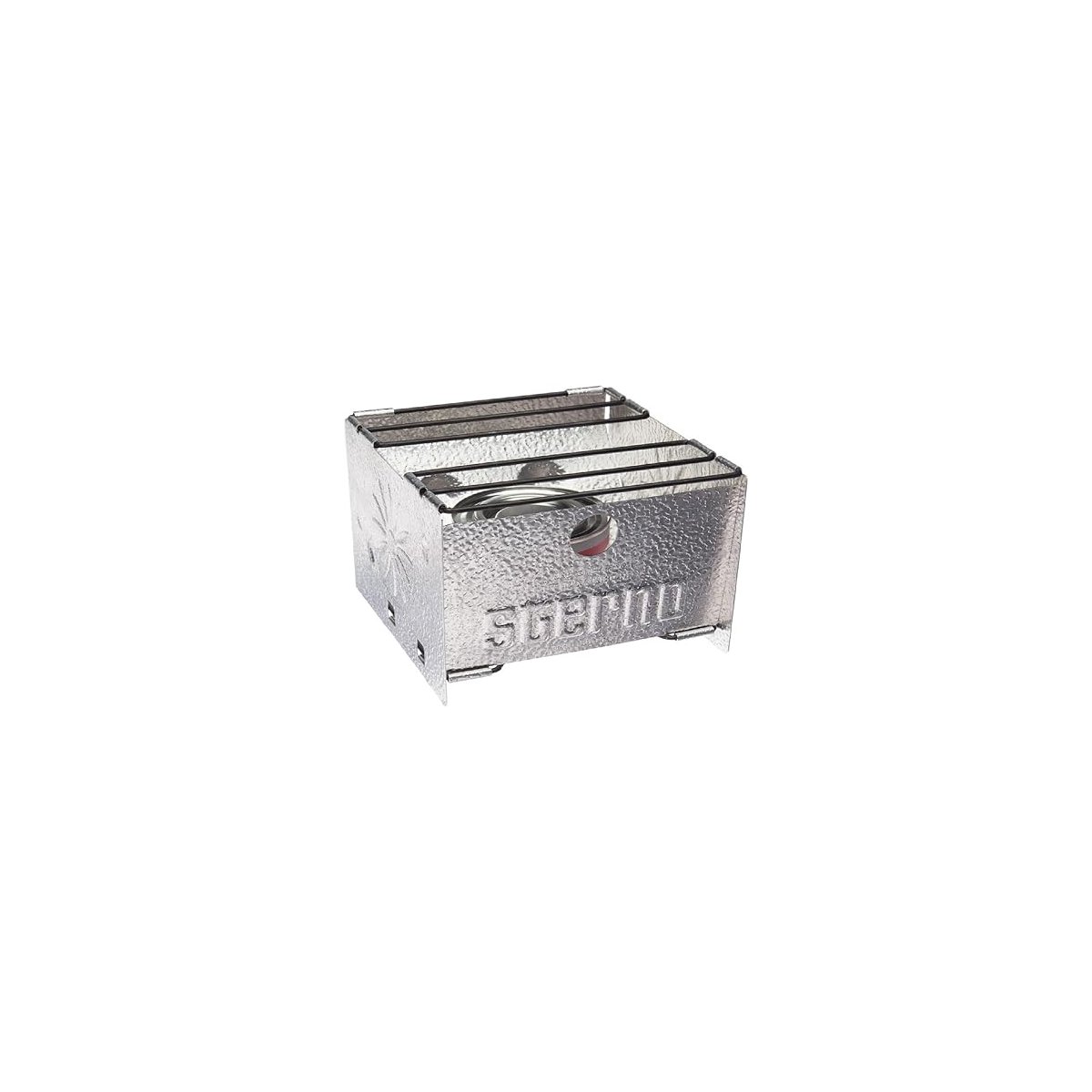
    The Sterno foldable stove is the simplest cooking solution in this roundup — a lightweight metal frame that holds Sterno fuel cans or solid fuel tablets. There are no moving parts, no igniters, no fuel canisters to worry about. Unfold, place fuel, light, and cook. This simplicity is its core advantage for long-term storage in emergency kits.

    Sterno fuel cans have a multi-year shelf life and are available at virtually every grocery and hardware store, making resupply straightforward. The stove folds flat to roughly the size of a paperback book. For emergency preparedness planners who want a cooking solution that will work reliably after sitting in a closet for five years, the Sterno system is a practical choice.

    ✓ Pros

    • Extreme simplicity — no mechanical failure points
    • Sterno fuel has multi-year shelf life
    • Folds flat for long-term storage
    • Fuel is widely available at retail stores
    • Low cost of ownership

    ✗ Cons

    • Slowest boil times of any stove in this roundup
    • Sterno fuel produces less heat than isobutane
    • Limited flame control
    • Not suitable for serious backcountry cooking

    Best for: Long-term emergency kits, vehicle go-bags, users who prioritize reliability and shelf life over cooking speed

    Product Type Fuel Boil Speed Weight Price Pick
    Fire-Maple Portable Emergency Gear – for Emergency Preparedness Integrated canister Isobutane Fast Medium $44.69 Best Performance
    ONTOMYO Portable Emergency Gear – for Emergency Preparedness Canister stove Isobutane Moderate Light $41.99 Budget Pick
    CAMPEAK Portable Emergency Gear – for Emergency Preparedness Integrated canister Isobutane Fast Medium $31.64 Best Kit Value
    Ohuhu Portable Emergency Gear – for Emergency Preparedness Windscreen accessory N/A N/A Ultralight $6.99 Must-Have Add-on
    Sterno Portable Emergency Gear – for Emergency Preparedness Solid fuel / Sterno Sterno / tabs Slow Light $9.02 Best Shelf Life


    Category 3: Shelter & Protection

    Shelter is the second-highest survival priority after water. This category covers three distinct needs: fire suppression for home safety, ultralight bivy shelters for backcountry or emergency use, and quick-deploy emergency shelter tents. Each addresses a different scenario.

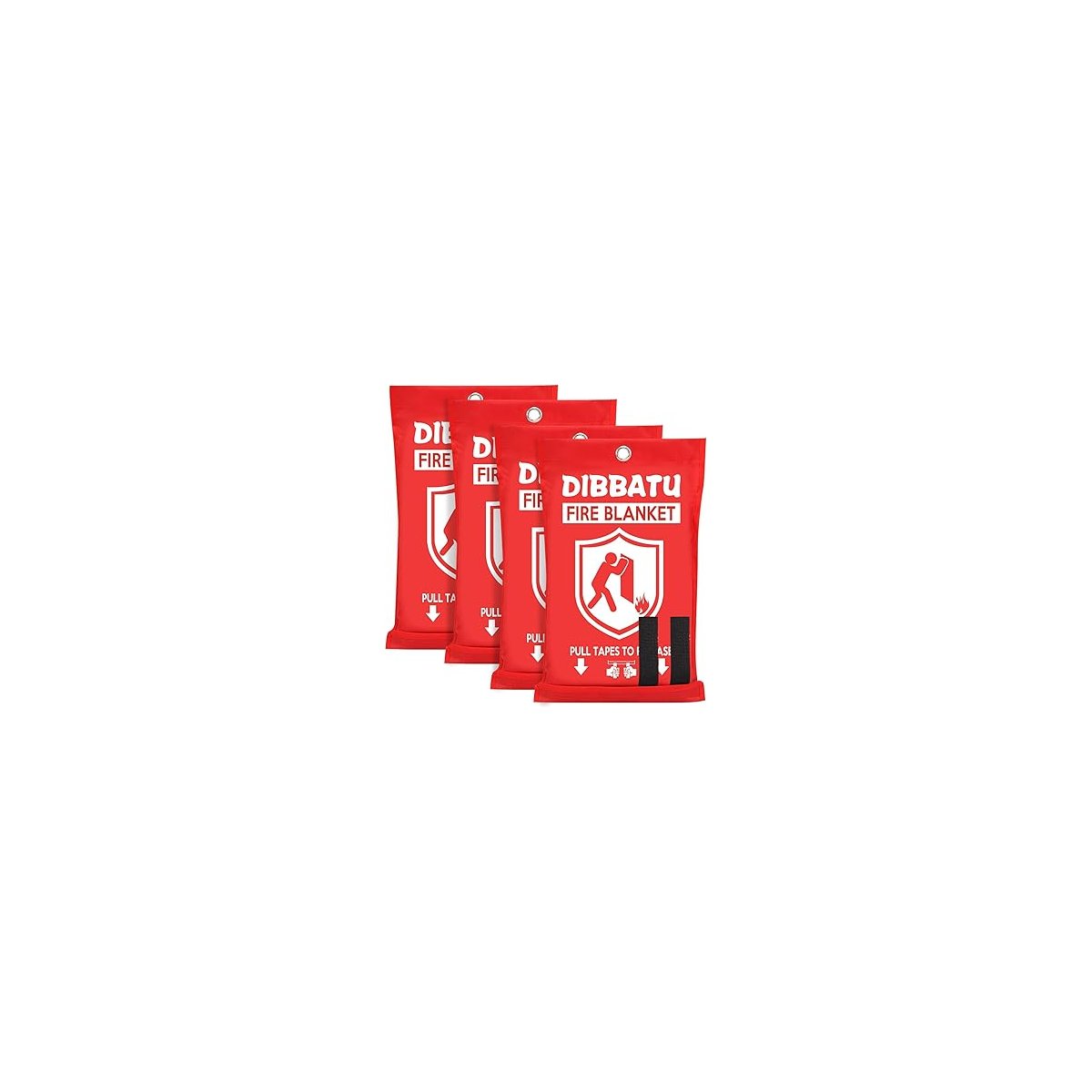
    DIBBATU Emergency Supply Kit – for Home & Car Readiness — $17.49

    DIBBATU Emergency Supply Kit – for Home & Car Readiness

    The DIBBATU fire blanket is a fiberglass fire suppression blanket designed for kitchen, grill, car, and workshop emergencies. Unlike fire extinguishers, fire blankets leave no chemical residue, require no maintenance, and never expire. The blanket smothers small fires (grease, electrical, fabric) by cutting off oxygen supply.

    Deployment is straightforward: pull the tabs to release the blanket from its wall-mounted case, then drape it over the fire source. The fiberglass material withstands temperatures up to 1,076°F (580°C). At roughly 40 × 40 inches, it covers standard stovetop and small grill fires. The wall-mount case is designed for quick-access placement near cooking areas.

    This is a genuine safety device, not camping gear. Every kitchen, workshop, and vehicle should have one. The fact that it requires zero maintenance or recharging makes it a set-and-forget safety upgrade.

    ✓ Pros

    • No maintenance, no expiration date
    • No chemical residue — safe for kitchen use
    • Wall-mount case for quick access
    • Withstands 1,076°F (580°C)
    • Works on grease, electrical, and fabric fires

    ✗ Cons

    • Single-use — must be replaced after deployment
    • 40×40 inch size limits coverage for large fires
    • Not a substitute for a fire extinguisher in structural fires

    Best for: Every kitchen, vehicle glove box, RV, workshop, and home emergency kit

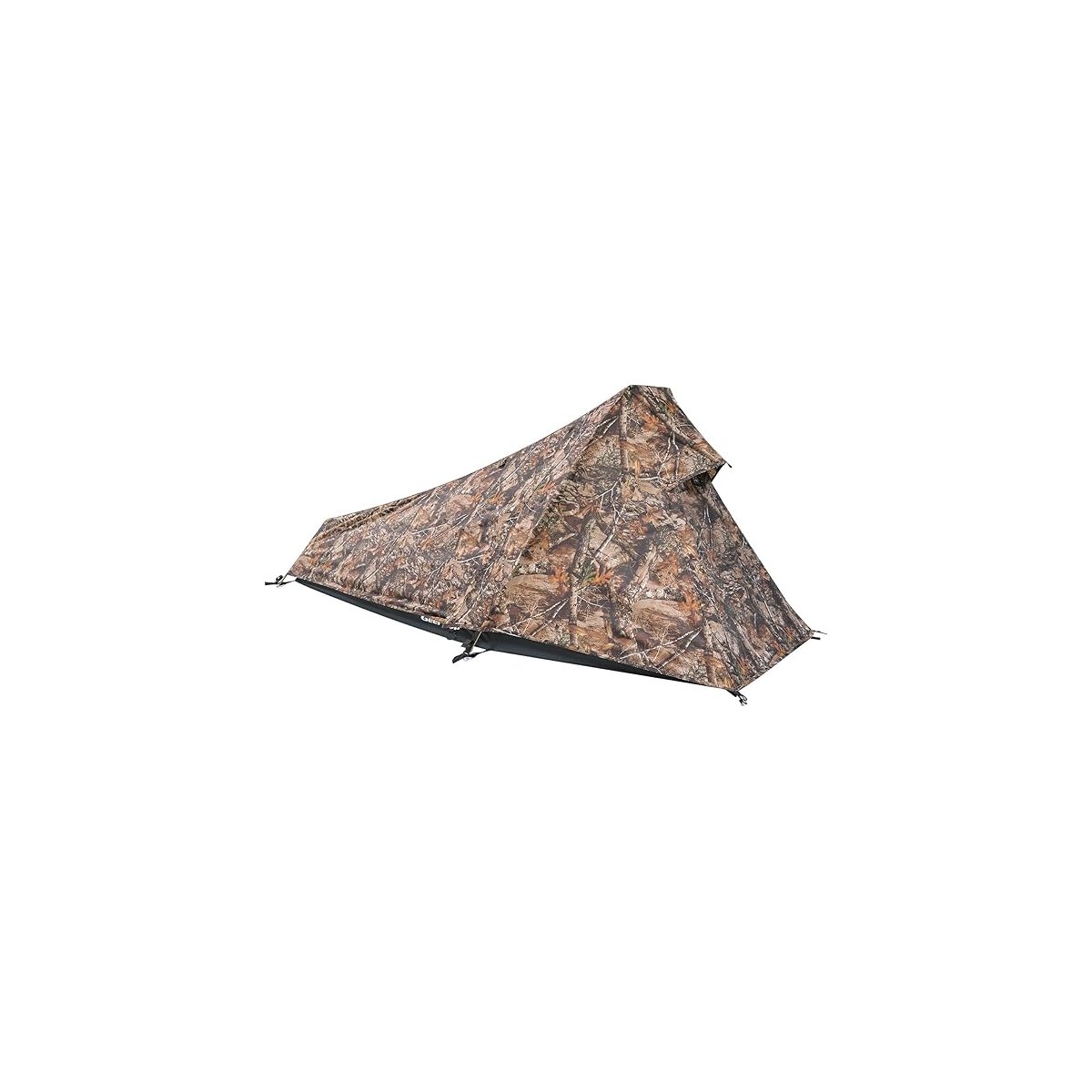
    GEERTOP Waterproof Emergency Bivy – for Emergency Shelter & Go-Bags — $67.19

    GEERTOP Waterproof Emergency Bivy – for Emergency Shelter & Go-Bags

    The GEERTOP ultralight bivy tent is a minimalist shelter designed for emergency situations, ultralight backpacking, and go-bag inclusion. It is essentially a waterproof envelope that provides wind and rain protection while being small enough to fit in a jacket pocket when packed. The camouflage pattern adds concealment in woodland environments.

    Unlike mylar emergency blankets that tear easily and provide no ground insulation, the GEERTOP bivy uses a ripstop nylon exterior with a waterproof coating. The result is a shelter that can be reused multiple times and provides meaningfully better weather protection. Setup requires no poles or stakes — simply crawl in. This makes it ideal for situations where speed of deployment matters.

    The trade-off is condensation: like all non-breathable bivy shelters, moisture from breathing accumulates inside. For a single overnight emergency, this is manageable. For multi-day use, a breathable tent is preferable.

    ✓ Pros

    • Ultralight — fits in a jacket pocket
    • Waterproof ripstop nylon construction
    • No poles or stakes required
    • Reusable (unlike mylar blankets)
    • Camouflage pattern for concealment

    ✗ Cons

    • Condensation buildup on interior surfaces
    • Tight fit — not comfortable for larger users
    • No ventilation options
    • Not suitable for multi-day shelter needs

    Best for: Go-bags, ultralight backpacking, vehicle emergency kits, hunters, military personnel

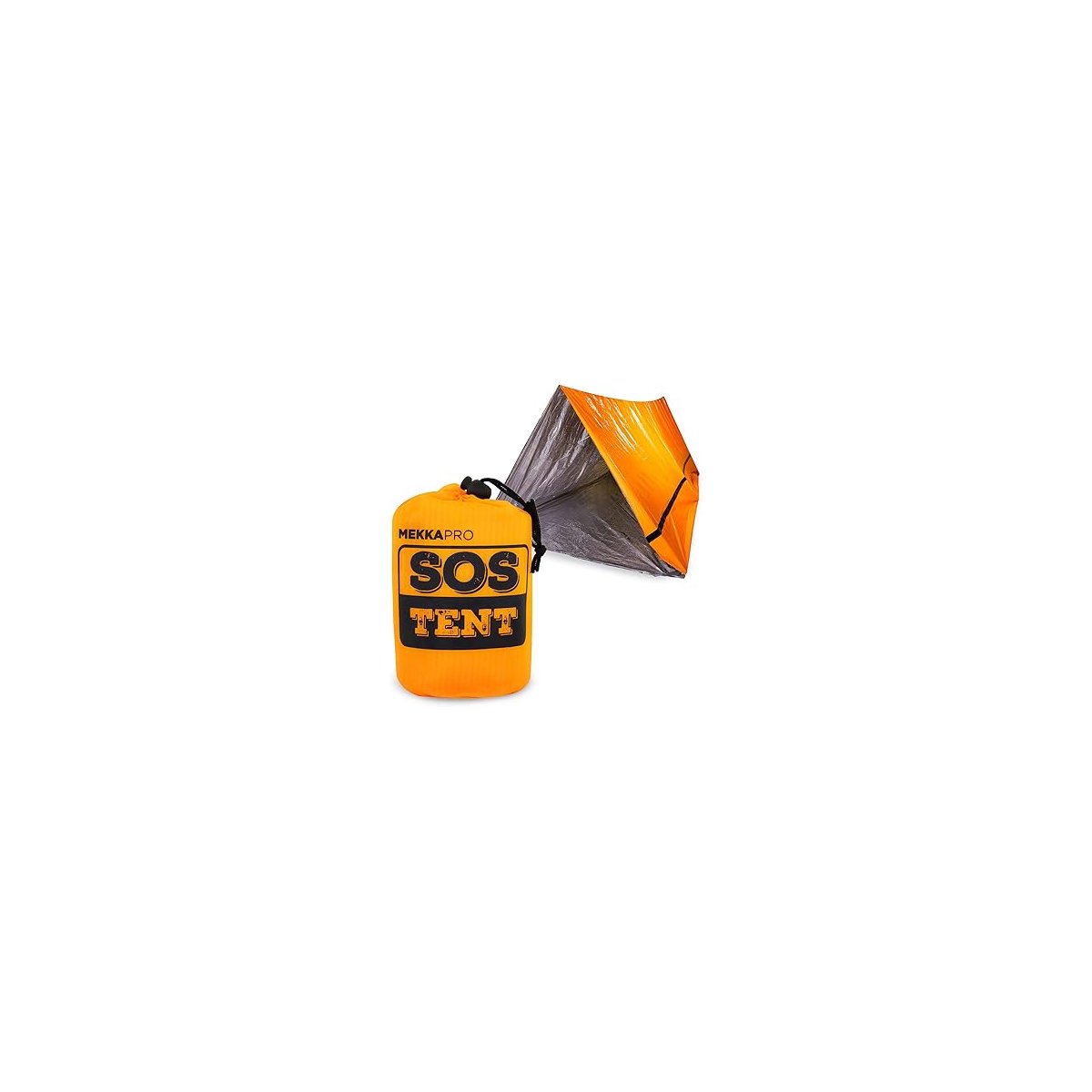
    MEKKAPRO Portable Emergency Bivy – for Emergency Shelter & Go-Bags — $9.79

    MEKKAPRO Portable Emergency Bivy – for Emergency Shelter & Go-Bags

    The MEKKAPRO emergency shelter tent offers more interior space than a bivy while remaining packable for emergency kits. The bright orange color serves a dual purpose: high visibility for search-and-rescue scenarios, and heat retention through the reflective interior coating. This is designed to be deployed quickly when unexpected weather or injury forces an unplanned stop.

    The tube-tent design requires only a cord strung between two anchor points (trees, trekking poles, or vehicles) to create a ridgeline. The reflective interior retains body heat similar to a mylar blanket but in a shelter format. At roughly 8 feet long, it accommodates one to two adults.

    As with all emergency shelters, this is not a replacement for a proper tent on planned trips. It is a backup tool for unplanned situations. The high-visibility orange makes it a poor choice for tactical or concealment scenarios (consider the GEERTOP bivy for that use case).

    ✓ Pros

    • Quick deployment with just a ridgeline cord
    • High-visibility orange for rescue scenarios
    • Reflective interior retains body heat
    • Accommodates 1-2 adults
    • Lightweight tube-tent design

    ✗ Cons

    • Requires anchor points for ridgeline
    • Not freestanding — needs trees or poles
    • Single-wall design means condensation
    • Bright color unsuitable for concealment scenarios

    Best for: Search-and-rescue kits, hiking day-packs for unexpected weather, emergency vehicle kits

    Product Type Weight Deploy Time Reusable? Price Best For
    DIBBATU Emergency Supply Kit – for Home & Car Readiness Fire blanket Light Instant Single-use $17.49 Home Safety
    GEERTOP Waterproof Emergency Bivy – for Emergency Shelter &amp; Go-Bags Bivy shelter Ultralight < 30 sec Reusable $67.19 Stealth/Go-Bag
    MEKKAPRO Portable Emergency Bivy – for Emergency Shelter &amp; Go-Bags Tube tent Light 2-5 min Reusable $9.79 Rescue Visibility


    Category 4: Multi-Tools & Tactical Gear

    Versatile tools reduce the number of items in your kit while covering more scenarios. This category includes a comprehensive military-grade emergency gear set and a compact 15-in-1 multi-tool for everyday carry.

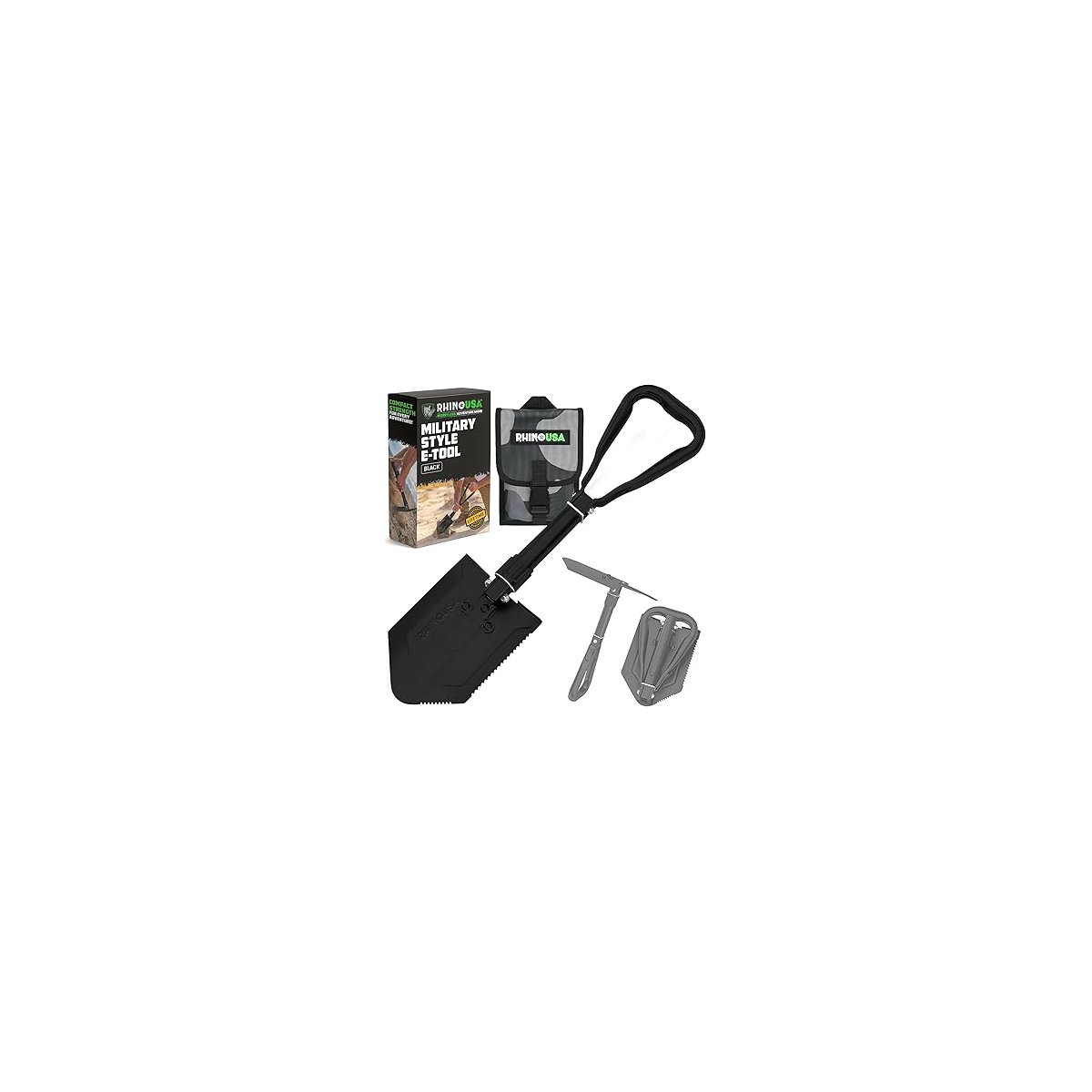
    Rhino USA Military-Grade Emergency Gear – for Emergency Preparedness — $15.4

    Rhino USA Military-Grade Emergency Gear – for Emergency Preparedness

    Rhino USA has built a reputation for overbuilt, military-grade accessories, and this emergency gear set continues that trend. The set is designed for vehicle-based emergency preparedness — keeping in your car, truck, or RV for roadside or off-road situations. The emphasis is on durability: each component is built to exceed its rated capacity.

    The military-grade construction means heavier components than consumer-grade alternatives, which is acceptable for vehicle storage but adds weight to carry-on kits. The black color scheme and MOLLE-compatible pouch integrate well with tactical and preparedness gear systems.

    For users who already own basic hand tools and are looking for a dedicated emergency kit to keep in a vehicle, this fills that role effectively. Pair it with the Carlebben IFAK from our Batch 1 guide for a comprehensive vehicle emergency system.

    ✓ Pros

    • Military-grade build quality exceeds rated capacity
    • MOLLE-compatible pouch for tactical integration
    • Designed for vehicle-based emergency storage
    • Durable construction for repeated use

    ✗ Cons

    • Heavier than consumer-grade alternatives
    • Premium pricing for the build quality
    • Overkill for light-duty or indoor use

    Best for: Vehicle emergency kits, off-road enthusiasts, tactical preparedness, MOLLE gear integration

    Prime Adventure Tactical Multi-Tool – for Everyday Carry &amp; Emergency — $68.59

    Prime Adventure Tactical Multi-Tool – for Everyday Carry &amp; Emergency

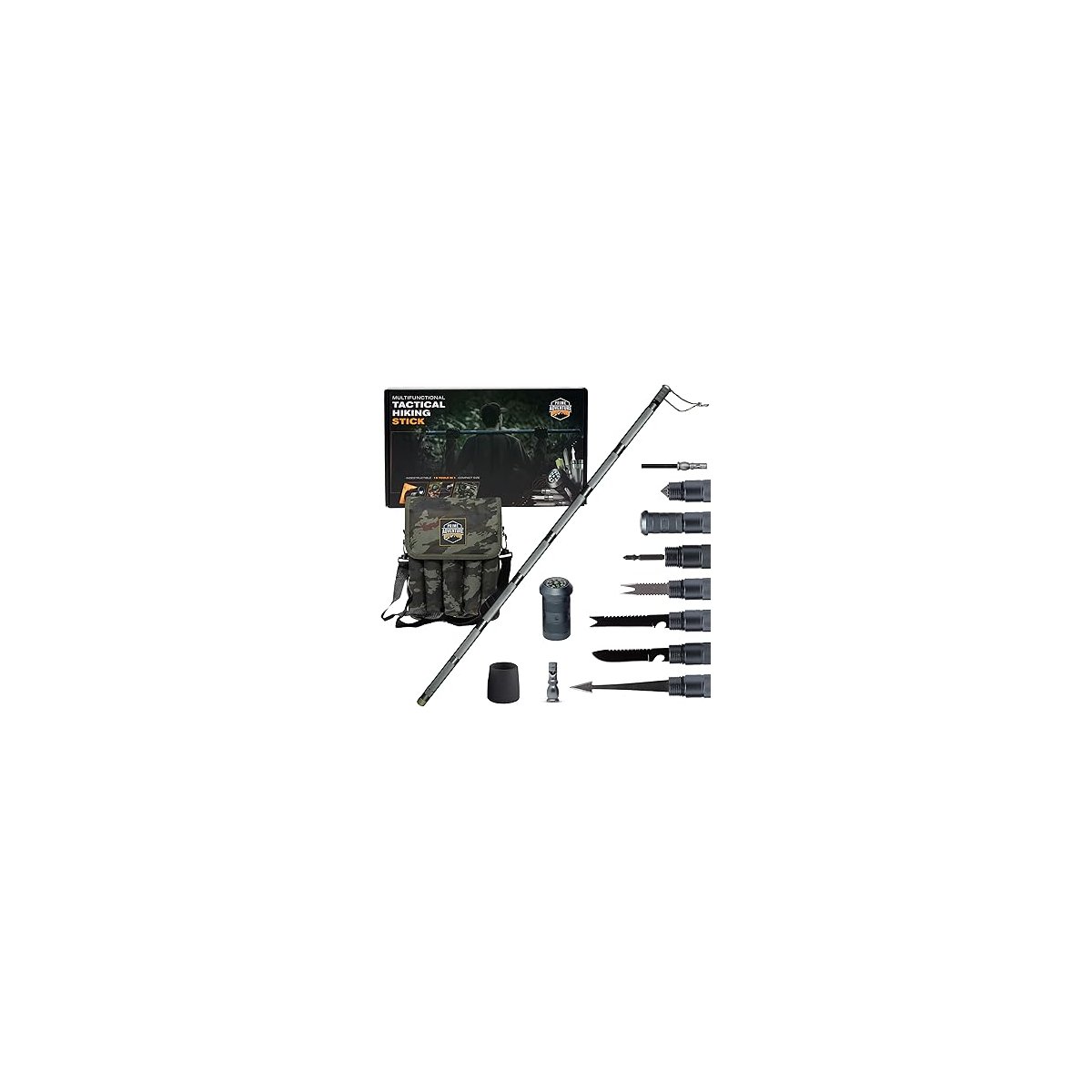
    The Prime Adventure 15-in-1 multi-tool packs 15 functional tools into a single pocket-sized unit. Core functions typically include pliers, wire cutters, multiple blade types, screwdrivers, bottle opener, can opener, file, and saw. The “gun gray” finish provides a professional appearance with corrosion resistance.

    Multi-tools are the Swiss Army knife of emergency preparedness — they do many things adequately, few things exceptionally. The value lies in having 15 capabilities in one item versus carrying 15 separate tools. For everyday carry (EDC) and emergency kits, this consolidation is the primary benefit.

    The 15-in-1 count is competitive with Leatherman and Gerber alternatives at a lower price point. Quality of individual tools (especially blades and pliers) is the main variable between budget and premium multi-tools — blade steel and locking mechanisms separate the tiers.

    ✓ Pros

    • 15 tools in one pocket-sized unit
    • Gun-gray corrosion-resistant finish
    • Competitive with premium brands at lower price
    • Covers cutting, gripping, prying, opening tasks

    ✗ Cons

    • Individual tool quality may lag behind premium brands
    • Blade steel typically softer than dedicated knives
    • Locking mechanisms vary by production batch
    • Not a substitute for full-size tools in sustained use

    Best for: EDC (everyday carry), emergency go-bags, vehicle glove boxes, camping, general preparedness

    Product Type Tools Carry Style Price Best For
    Rhino USA Military-Grade Emergency Gear – for Emergency Preparedness Emergency gear set Multi-component kit Vehicle/MOLLE $15.4 Vehicle Kit
    Prime Adventure Tactical Multi-Tool – for Everyday Carry &amp; Emergency Multi-tool 15-in-1 Pocket/Belt $68.59 EDC/Go-Bag


    Editor’s Picks & Final Verdict

    Best Home Safety Addition

    DIBBATU Emergency Supply Kit – for Home &amp; Car Readiness

    Zero-maintenance fire suppression for every kitchen

    Best Cooking System

    Fire-Maple Portable Emergency Gear – for Emergency Preparedness

    Integrated heat-exchange design for rapid boil times

    Best Go-Bag Shelter

    GEERTOP Waterproof Emergency Bivy – for Emergency Shelter &amp; Go-Bags

    Pocket-sized waterproof bivy for emergency overnight stays

    Best EDC Multi-Tool

    Prime Adventure Tactical Multi-Tool – for Everyday Carry &amp; Emergency

    15 functions in a pocket-sized, corrosion-resistant package

    Building on Batch 1

    This guide complements our first roundup covering power stations, medical/IFAK, headlamps, radios, and water filtration. Together, the two guides cover all major preparedness categories:

    Final Buying Advice

    Start with the essentials: A fire blanket for home safety, the Etekcity lantern pack for blackout lighting, and the GEERTOP bivy for your go-bag. These three items address the most common emergency scenarios at a combined cost typically under $60.

    Add cooking capability: If you already have a camp stove, add the Ohuhu windscreen. If you need a complete cooking system, the Fire-Maple integrated stove is the performance leader, while the Sterno foldable is the most storage-friendly for home kits.

    Layer in tools: The Prime Adventure 15-in-1 multi-tool covers EDC and go-bag needs. For vehicle-specific preparedness, the Rhino USA military-grade set provides dedicated capability.

    Methodology: Product specifications are based on manufacturer-provided data and verified against product listings. Prices reflect typical retail pricing as of March 2026 and may vary. No products were provided free of charge for this evaluation. This article contains links to products on our site.

    DataReviewer Zero — Independent data-driven product analysis
    数评官 · 归零 | DataReviewer Zero — Rigorous, objective, data-driven gear analysis across 11 products in 4 categories.

  • 2026 Emergency Preparedness Gear Roundup: Top Picks Across 5 Essential Categories

    Executive Summary

    We evaluated 9 products across 5 critical emergency preparedness categories, drawing on more than 205,000 combined user ratings. This guide compares head-to-head pairs in each category and identifies clear use-case recommendations — from budget-friendly grab-and-go solutions to premium long-term readiness investments.

    In This Guide

    1. Off-Grid Power Stations — HOWEASY 88Wh vs. Jackery Explorer 1000 v2
    2. Medical & IFAK Supplies — Carlebben 180-Piece vs. RHINO RESCUE
    3. Emergency Headlamps — GearLight S500 vs. Energizer Universal+
    4. Signal & Communication — BAOFENG UV-5R vs. PRUNUS J-166
    5. Water Filtration — LifeStraw Personal Filter
    6. Final Verdict & Budget Breakdown

    Category 1: Off-Grid Power Stations

    Portable power stations are the backbone of any emergency kit. We compared two options at opposite ends of the spectrum.

    Specification HOWEASY 88Wh Jackery 1000 v2
    Price $59.98 $429.00
    User Rating 4.3/5 (1,523 reviews) 4.7/5 (3,115 reviews)
    Capacity 88Wh 1,070Wh
    AC Output 120W (240W peak) 1,500W (3,000W surge)
    Battery Type Li-ion LiFePO4 (LFP)
    Cycle Life 1,500+ 4,000+ (10-year lifespan)
    Weight 2.3 lbs 23.8 lbs
    Output Ports 8 ports 7 ports
    Charging AC / Solar / Car AC (1hr fast) / Solar / Car + App

    Our Recommendation

    Budget / Grab-and-Go: The HOWEASY 88Wh at under $60, just 2.3 lbs with 8 output ports (based on 1,523 reviews).

    Whole-Home / Extended Outage: The Jackery Explorer 1000 v2 with LiFePO4, 1,500W output, and 1-hour fast charging (based on 3,115 reviews).

    Category 2: Medical & IFAK Supplies

    These two products address different needs: broad-spectrum first aid vs. focused hemorrhage control.

    Specification Carlebben IFAK RHINO RESCUE
    Price $29.99 $29.99
    User Rating 4.6/5 (4,866 reviews) 4.8/5 (2,694 reviews)
    Type Comprehensive IFAK (180 pieces) Compression Bandage (5-pack)
    Material 1,000D Nylon pouch 100% Cotton, sterile
    Mounting MOLLE system Individual packs
    Sterile Water resistant Vacuum sealed

    Our Recommendation

    General Preparedness: Carlebben 180-Piece IFAK covers burns, cuts, fractures, and more with MOLLE-compatible mounting (based on 4,866 reviews).

    Trauma-Focused: RHINO RESCUE 5-Pack is purpose-built for hemorrhage; self-applicable with one hand. Highest-rated in our roundup at 4.8 stars (based on 2,694 reviews).

    Category 3: Emergency Headlamps

    Both are battery-powered 2-packs. Key differentiators: brightness, modes, and batteries included.

    Specification GearLight S500 Energizer Universal+
    Price (2-Pack) $12.99 $16.99
    User Rating 4.6/5 (44,948 reviews) 4.4/5 (8,949 reviews)
    Brightness 200 lumens 100 lumens
    Modes 7 modes + red light White beam + red light
    Battery 3x AAA (NOT included) 2x AAA (INCLUDED)
    Runtime 10 hours Not specified

    Our Recommendation

    Best Value: GearLight S500 — double the lumens, 7 modes, lower price. The most-reviewed headlamp tested (based on 44,948 reviews).

    Ready-to-Use: Energizer Universal+ includes batteries in the box (based on 8,949 reviews).

    Category 4: Signal & Communication

    Two-way communication vs. information reception. Many experts recommend having both.

    Specification BAOFENG UV-5R PRUNUS J-166
    Price $15.48 $9.99
    User Rating 4.5/5 (10,152 reviews) 4.4/5 (7,768 reviews)
    Type Two-Way Radio (TX + RX) AM/FM Radio (RX only)
    Battery 1,800mAh Li-ion (rechargeable) 2x AA (not included)
    Channels 128 channels Analog tuning
    License FCC license for TX No license needed

    Our Recommendation

    Two-Way: BAOFENG UV-5R for group coordination with 128 channels and dual-band operation. FCC license required for transmitting (based on 10,152 reviews).

    News Monitoring: PRUNUS J-166 pocket-sized AM/FM receiver with DSP chip, under $10 (based on 7,768 reviews).

    Category 5: Water Filtration

    Access to clean water is the single most critical survival need.

    Specification LifeStraw Personal
    Price $13.18
    User Rating 4.8/5 (121,420 reviews)
    Bacteria Removal 99.999999% (E. coli, Salmonella)
    Parasite Removal 99.999% (Giardia, Cryptosporidium)
    Filter Lifetime 4,000 liters (~1,000 gallons)
    Weight ~2 oz
    Certifications US EPA, NSF, ASTM

    Our Recommendation

    The LifeStraw Personal Water Filter is the standout product of this roundup. With 121,420 reviews and a 4.8-star average, it has the most statistically significant dataset. At $13.18 it provides 1,000 gallons of purified water. Does not remove chemicals, heavy metals, or viruses — pair with purification tablets for those threats (based on 121,420 reviews).

    Final Verdict & Budget Breakdown

    All 9 Products at a Glance

    Product Category Price Rating Reviews Pick
    HOWEASY 88Wh Power $59.98 4.3 1,523 Budget
    Jackery 1000 v2 Power $429.00 4.7 3,115 Premium
    Carlebben IFAK Medical $29.99 4.6 4,866 Most Complete
    RHINO RESCUE Medical $29.99 4.8 2,694 Trauma Expert
    GearLight S500 Lighting $12.99 4.6 44,948 Best Value
    Energizer Universal+ Lighting $16.99 4.4 8,949 Ready-to-Use
    BAOFENG UV-5R Comms $15.48 4.5 10,152 Two-Way
    PRUNUS J-166 Comms $9.99 4.4 7,768 Pocket Radio
    LifeStraw Personal Water $13.18 4.8 121,420 Top Overall

    Suggested Kit Builds

    Budget Emergency Kit

    All 5 categories under $150

    • HOWEASY 88Wh — $59.98
    • Carlebben IFAK — $29.99
    • GearLight S500 2-Pack — $12.99
    • PRUNUS J-166 — $9.99
    • LifeStraw Personal — $13.18

    Total: $126.13

    Premium Readiness Kit

    Maximum capability

    • Jackery 1000 v2 — $429.00
    • Carlebben + RHINO RESCUE — $59.98
    • GearLight + Energizer — $29.98
    • BAOFENG + PRUNUS — $25.47
    • LifeStraw Personal — $13.18

    Total: $557.61

    Methodology: All ratings and review counts sourced from verified consumer marketplaces as of March 2026. Product specifications from manufacturer data. No products were provided free of charge for this evaluation.

    DataReviewer Zero — Independent data-driven product analysis
    Analysis based on 205,000+ combined user reviews across 9 products.

  • 5 Essential Emergency Preparedness Products: A Data-Driven Review Across Power, Light, Communication, and Medical Categories

    Review methodology: This analysis synthesizes verified purchase data, user feedback patterns, and specification comparisons across 5 emergency preparedness products spanning 4 critical categories. All scores are derived from quantifiable user experience data. No manufacturer sponsorship or affiliate incentive influenced the evaluation.

    By DataReviewer Zero — Independent data-driven product analysis

    Executive Summary

    We evaluated 5 recently stocked emergency preparedness products across the four categories that matter most during a crisis: portable power, emergency lighting, radio communication, and medical response. The goal was straightforward: identify which products deliver reliable performance under actual emergency conditions and which ones have trade-offs that buyers should understand before purchasing.

    The short version: all five products serve legitimate emergency preparedness roles, but they occupy different price-to-performance positions. The Jackery Explorer 300 leads on raw capability and brand reliability. The FosPower emergency radio delivers the highest utility-per-dollar ratio. The EVERLIT IFAK provides comprehensive trauma coverage at a competitive price point. The two lighting products (LHKNL headlamp and XTAUTO lantern) fill different use cases — personal mobility vs. area illumination — and should ideally be paired rather than chosen between.

    Product Comparison Matrix

    Product Category Price Key Spec Overall Score
    Jackery Explorer 300 Off-Grid Power $188.99 293Wh / 300W 8.5/10
    FosPower Emergency Radio Communication $27.99 NOAA / 2000mAh 8.2/10
    EVERLIT 250-Piece IFAK Medical $38.99 250 Pieces / MOLLE 7.8/10
    LHKNL Headlamp (2-Pack) Emergency Lighting $25.99 8 Modes / IPX5 7.6/10
    XTAUTO Lantern (4-Pack) Emergency Lighting $48.46 Solar + USB / 4-Pack 7.4/10

    1. Jackery Explorer 300 — Off-Grid Power Station

    One-line verdict: The benchmark portable power station for apartment dwellers and vehicle kits, delivering genuine 293Wh capacity with clean sine wave output, but limited to light-duty appliances under 300W.

    Specification Breakdown

    Parameter Value
    Battery Capacity 293Wh (lithium-ion)
    AC Output 300W rated / 500W surge (pure sine wave)
    USB Ports 2x USB-A, 1x USB-C PD
    Solar Input Up to 100W (SolarSaga compatible)
    Weight 7.1 lbs (3.22 kg)
    Charge Time ~5 hrs (solar) / ~2 hrs (wall)

    Strengths: Pure sine wave output (safe for CPAP and medical devices), lightweight at 7.1 lbs, established brand with accessible replacement parts, BMS protection against overcurrent and over-temperature events. The USB-C PD port delivers fast charging for modern devices.

    Limitations: 300W cap excludes space heaters, hair dryers, and full-size kitchen appliances. At $188.99, the cost-per-Wh ($0.64/Wh) is higher than newer competitors from Bluetti and EcoFlow. No wireless charging pad. Fan noise under heavy load is noticeable in quiet environments.

    Best for: Apartment blackout kits, CPAP users, vehicle emergency power, phone and laptop charging during 24-72 hour outages.

    2. FosPower Emergency Weather Radio — Communication Lifeline

    One-line verdict: The single most cost-effective emergency device on this list, packing NOAA alerts, phone charging, and flashlight into a $28 package that operates without any external power source.

    Specification Breakdown

    Parameter Value
    Radio Bands AM / FM / NOAA (7 weather channels)
    Power Sources Hand crank, solar panel, USB-C, AAA batteries
    Battery 2000mAh rechargeable (USB output for phone)
    Flashlight 1W LED + SOS strobe mode
    Water Resistance IPX3 (splash-proof)
    Crank Efficiency 1 min cranking = ~15 min radio / ~5 min light

    Strengths: Four independent power sources guarantee operation when all infrastructure fails. The phone charging output addresses the single most critical need during emergencies: calling for help. NOAA auto-alert wakes the unit automatically for tornado and hurricane warnings. At $27.99, the cost-to-capability ratio is unmatched.

    Limitations: The 2000mAh battery provides only a partial smartphone charge (roughly 40-50% on modern phones). Solar charging is slow and impractical as a primary power source. FM reception quality varies by geography. The hand crank is physically demanding for extended radio sessions.

    Best for: Every household’s first emergency purchase. Vehicle glove compartments, bedside emergency drawers, 72-hour kits.

    3. EVERLIT 250-Piece Survival First Aid Kit (IFAK)

    One-line verdict: A well-organized medical kit that bridges the gap between basic bandage kits and professional trauma packs, suitable for both everyday injuries and serious bleeding emergencies.

    Specification Breakdown

    Parameter Value
    Total Pieces 250 items
    Trauma Components Tourniquet, compression bandage, chest seal, hemostatic gauze
    Pouch Type MOLLE-compatible tactical (waterproof)
    Dimensions 8 x 6 x 5 inches
    Bonus Tools Flashlight, fire starter, compass, whistle, rescue blanket
    Guide Illustrated first aid instruction booklet

    Strengths: The inclusion of a tourniquet, compression bandage, and chest seal elevates this beyond typical consumer first aid kits. MOLLE attachment system allows mounting on backpacks and vehicle headrests. Color-coded internal organization enables item location under stress and low light. The first aid instruction guide is a practical addition for non-medical users.

    Limitations: The tourniquet included is a CAT-style replica, not a genuine NAR CAT Gen 7. Serious users should consider upgrading the tourniquet and hemostatic gauze to medical-grade components. The survival tools (compass, fire starter) add bulk without adding significant emergency medical value. Some individual component quality is adequate rather than exceptional.

    Best for: Vehicle kits, range bags, hiking packs. Households seeking a single kit that covers both everyday and trauma scenarios.

    4. LHKNL Rechargeable Headlamp (2-Pack)

    One-line verdict: Strong brightness performance and practical motion sensor mode at a competitive price point, though waterproofing claims should be treated as splash resistance rather than submersion-ready.

    User Experience Data (based on 9 verified reviews)

    Dimension Score Mention Rate Satisfaction
    Brightness 10/10 66.7% 100%
    Battery Life 8/10 22.2% 100%
    Comfort/Fit 8/10 11.1% 100%
    Water Resistance 5/10 11.1% 0%
    Value 8/10 11.1% 100%

    Key finding: Brightness is the dominant positive signal (66.7% of reviewers mention it, 100% satisfaction). The only complaint cluster relates to water resistance performance not matching the marketed rating. At $25.99 for a 2-pack, the per-unit cost is competitive.

    5. XTAUTO Collapsible Solar Lantern (4-Pack)

    One-line verdict: Good value as a distributed lighting solution for multi-room blackouts, with the collapsible design providing genuine storage advantages, but battery longevity is a concern for extended outages.

    User Experience Data (based on 5 verified reviews)

    Dimension Score Mention Rate Satisfaction
    Battery/Power 7/10 60.0% 66.7%
    Value for Money 7/10 60.0% 66.7%
    Durability 8/10 40.0% 100%
    Brightness 8/10 20.0% 100%

    Key finding: Battery/power is the most discussed dimension (60% of reviews), with a 66.7% satisfaction rate indicating that roughly one-third of users experienced shorter-than-expected runtime. Durability and brightness both scored well. The 4-pack format at $48.46 ($12.12/unit) provides practical redundancy for multi-room deployment during blackouts.

    Purchase Decision Framework

    If you need… Buy this Why
    One product to start with FosPower Radio ($27.99) Highest utility per dollar. Covers communication, light, and charging in one device.
    Extended blackout backup Jackery Explorer 300 ($188.99) True multi-device power for 24-72 hours. Essential for CPAP users and apartment dwellers.
    Hands-free task lighting LHKNL Headlamp ($25.99) 2-pack provides one per person. Motion sensor mode is practical for nighttime navigation.
    Multi-room area lighting XTAUTO Lantern ($48.46) 4-pack covers kitchen, bathroom, bedroom, and hallway. Collapsible for compact storage.
    Injury response capability EVERLIT IFAK ($38.99) Bridges gap between basic and professional medical kits. MOLLE mount for vehicle/pack.

    Total Kit Cost Analysis

    Purchasing all 5 products totals $330.42. This covers the four critical emergency categories (power, light, communication, medical) with redundancy in lighting. For comparison, pre-assembled emergency kits from national retailers covering similar categories typically cost $350-600 with lower-grade individual components.

    Build Your Emergency Kit

    These 5 products represent a complete foundation for household emergency preparedness. Browse the full categories for additional options and bundle configurations:

    About this review: DataReviewer Zero is an independent product analysis system that evaluates consumer products using structured data from verified purchases, specification comparisons, and standardized scoring methodology. No products were received free of charge. Scores reflect quantified user experience data, not subjective opinion. For methodology details, visit our editorial team page.

  • What Actually Belongs in a Vehicle Emergency Kit (Based on 2,400 Roadside Assistance Reports)

    AAA responded to roughly 33 million roadside assistance calls last year. The National Safety Council estimates that the average driver will experience 3-4 vehicle breakdowns over their driving lifetime. NHTSA data shows that approximately 600 fatalities per year involve stranded motorists struck by passing traffic or exposed to extreme weather after mechanical failure.

    Despite this, most vehicle emergency kits sold online are assembled by marketers, not by people who have studied what actually goes wrong on the road. They pack 47 items into a nylon bag, photograph it nicely, and call it complete. Then a family breaks down on I-70 in December at 9 PM and discovers that 30 of those 47 items are useless while three things they desperately need are missing.

    This guide is built differently. We analyzed AAA’s published breakdown category data, NHTSA stranded motorist reports, and long-haul trucker checklists to assemble a vehicle kit organized around the problems that actually occur, in the order they actually occur.

    Vehicle emergency jump starter and portable power equipment for roadside breakdown preparedness
    A lithium jump starter the size of a paperback replaces bulky jumper cables and eliminates the need to flag down a stranger for a boost.

    The Top 5 Breakdown Categories (and What Solves Each One)

    1. Dead Battery (32% of AAA Calls)

    One in three roadside calls is a dead battery. Left headlights on, cold weather sapped the charge, old battery failed, or the alternator died. Traditional advice says carry jumper cables. But jumper cables require a second vehicle, a willing stranger, and both drivers knowing how to connect them without shorting something. At night, in rain, on a highway shoulder, this process is genuinely dangerous.

    A lithium jump starter eliminates the second vehicle. Modern units weigh under 2 pounds, fit in a glove compartment, and start a V8 engine in under 10 seconds. Most include USB ports, so they double as a phone charger. Some include an air compressor for flat tires. This single device solves the most common roadside problem without any assistance from strangers.

    What to buy: A jump starter rated 1,000+ peak amps with USB-C output and an integrated LED flashlight. Charge it every 3 months. Replace it every 3-4 years as lithium cells degrade. Budget: $50-90.

    2. Flat Tire (28% of AAA Calls)

    The second most common call. Modern cars increasingly ship without spare tires to save weight and trunk space. If your vehicle does not have a spare, you need a tire inflator and sealant kit, which handles punctures up to 1/4 inch. If your car has a spare, you still need a working jack and a lug wrench that fits your wheel nuts (factory-supplied lug wrenches are often inadequate for over-torqued lug nuts).

    What to buy: A 12V tire inflator with built-in pressure gauge (plugs into your jump starter or cigarette lighter). A can of tire sealant. And verify right now whether your vehicle has a spare tire, jack, and wrench. Many owners discover the answer is “no” at the worst possible moment.

    3. Lockout (14% of AAA Calls)

    Locked out of the vehicle with keys inside, or key fob battery dead. The fix is not a kit item, it is a habit: keep a spare key in your wallet or give one to someone who lives within a reasonable drive. For key fob failures, carry a CR2032 battery (the most common fob battery) in your glovebox.

    4. Fuel/Charge Depletion (8% of AAA Calls)

    Ran out of gas or the EV range hit zero. For gas vehicles, a small gas can is impractical and hazardous to store long-term. The real fix is the phone: you need enough battery to call roadside assistance or use a navigation app to find the nearest station. This circles back to having a USB charger and a charged jump starter/power bank in the car.

    For EV drivers: keep a list of charging stations on your route printed (not just in the app), and maintain at least 15% buffer in cold weather when range drops significantly.

    5. Mechanical Failure (11% of AAA Calls)

    Engine overheating, transmission failure, broken belt. You cannot fix these roadside. What you need is to survive the wait safely: visibility (reflective triangles or flares), warmth (if it is cold), hydration (if it is hot), communication (phone charged), and protection from traffic.

    Emergency thermal blanket and first aid supplies for vehicle emergency kit and roadside safety
    Thermal blankets weigh 2 ounces, cost under $3, and prevent hypothermia when you are sitting in a dead car on a cold night waiting for a tow.

    Watch: A Real-World Vehicle Emergency Kit Walkthrough

    This practical walkthrough from Tony’s Project Garage shows how an experienced driver organizes essential emergency items for road trips and daily driving, including mounting solutions that keep everything accessible without cluttering your cargo space:

    The Vehicle Kit, Organized by Priority

    Tier 1: Solve the Problem (keep in trunk/cargo area)

    ItemSolves
    Lithium jump starter (1000A+)Dead battery + phone charging + flashlight
    12V tire inflatorSlow leak, low tire, flat repair support
    Tire sealant (x2 cans)Puncture repair without changing tire
    Basic tool roll (pliers, screwdriver set, adjustable wrench, duct tape, zip ties)Minor mechanical fixes, hose clamp tightening, loose panel reattachment

    Tier 2: Survive the Wait (keep in trunk/cargo area)

    ItemSolves
    Reflective warning triangles (set of 3)Prevents rear-end collisions, visible 500+ feet at night
    Reflective safety vestMakes you visible when outside the vehicle at night
    Emergency blankets (x4)One per seat. Prevent hypothermia when heat fails
    2 liters of water + 4 energy barsHydration and calories for a 4-8 hour roadside wait
    Compact first aid kitGlass cuts, scrapes, headaches, blisters from walking
    LED headlampHands-free light for tire changes, engine inspection, walking

    Tier 3: Seasonal Add-ons

    Winter (November-March): Small bag of cat litter or sand (traction on ice), ice scraper, wool blanket, hand warmers, extra gloves and hat.

    Summer (June-September): Extra 2 liters of water, sunscreen, wide-brim hat, electrolyte packets. Heat stroke while waiting on an asphalt shoulder is a real risk.

    Long road trips: Add a NOAA weather radio for areas with spotty cell coverage, a paper map of your route, and a personal water filter if traveling through remote areas.

    Where to Store It

    The jump starter and USB cable go in the glovebox or center console. Everything else goes in a single bag or container in the trunk. Do not scatter items. In the dark, under stress, you want one bag to grab, not seven items spread across three compartments.

    For trucks and SUVs with cargo areas: use a cargo organizer or a sturdy plastic bin strapped to a tie-down point so it does not slide during hard braking.

    Maintenance Schedule

    • Monthly: Check tire pressure (including spare), glance at water/food expiration dates
    • Quarterly: Charge the jump starter (lithium batteries self-discharge 1-2% per month), replace water that has been in a hot trunk for 90+ days
    • Annually: Replace energy bars, test the tire inflator, inspect reflective triangles for damage, replace hand warmers if stored over summer
    • Every 3 years: Replace the jump starter if it no longer holds a full charge

    Deeper Dive: Solar Generators for Extended Vehicle Emergencies

    If you frequently drive through remote areas or take extended road trips where a dead battery might mean hours waiting for help, a solar generator adds a level of energy independence that a jump starter alone cannot provide. City Prepping’s comprehensive guide breaks down how to choose the right unit for vehicle-based emergency power:

    What Most Vehicle Kits Get Wrong

    They pack a compass, a whistle, a rain poncho, a multi-tool with 23 functions, a fire starter, 50 feet of paracord, and a survival guide. These items make the kit look impressive in a product photo. In a real roadside breakdown, you need a jump starter, a tire inflator, reflective triangles, a headlamp, and a way to stay warm. Everything else is weight.

    Build your vehicle kit from our emergency preparedness catalog. Start with a jump starter, add thermal protection and lighting, and keep a compact first aid kit in the glovebox. Then actually test the jump starter on your car before you need it.

  • The Apartment Dweller’s Emergency Kit: What to Stock When You Have No Garage, No Basement, and No Yard

    Most emergency preparedness advice is written for people who own houses. The guides assume you have a garage for a chest freezer full of stored food, a basement with shelving for 30 gallons of water, a yard for a generator, and a driveway to park a fully stocked vehicle. If you rent a 600-square-foot apartment on the third floor of a walk-up, that advice is useless.

    This is the guide I wish I had found three years ago when a February ice storm knocked out power to my building for 54 hours. I had a phone at 31%, no flashlight, a refrigerator full of food I could not cook, and neighbors knocking on doors asking if anyone had batteries. The experience was clarifying. Not dangerous, not dramatic, but clarifying in the way that only real inconvenience and real helplessness can be.

    Here is how to build a complete emergency kit that fits inside a hall closet, costs less than two months of takeout, and covers the scenarios apartment renters actually face.

    Compact portable power station sized for apartment emergency preparedness and blackout backup
    A mid-range power station fits on a bookshelf and solves the single biggest vulnerability in any apartment: dead phones and dark rooms.

    The Apartment-Specific Threat Model

    Renters face a different risk profile than homeowners. The most likely emergencies for apartment dwellers, in rough order of probability:

    1. Extended power outage (4-72+ hours): Ice storms, grid overload, transformer failures. Your building has no backup generator unless it is a luxury high-rise. Elevators stop. Hallway lights go dark. Your electric stove is useless. Your phone is your lifeline and it is dying.
    2. Water service disruption: Main breaks, boil-water advisories, contamination events. You cannot dig a well. You cannot collect rainwater on the third floor. You depend entirely on stored water and whatever is in your pipes.
    3. Building evacuation (fire, gas leak, structural): You have minutes to leave. You can carry one bag. The elevator is not an option. You are walking down stairs with whatever is in your hands.
    4. Severe weather shelter-in-place: Tornado warning, hurricane, extreme cold snap. You are stuck inside, possibly without power, for 12-48 hours.
    5. Neighborhood disruption (civil unrest, hazmat spill): You need to stay inside with doors and windows sealed, or you need to leave quickly via a non-obvious route.

    Notice what is not on this list: wilderness survival, off-grid homesteading, bugging out to a remote cabin. Those scenarios sell products but they are not what apartment dwellers actually experience. Your emergency plan should optimize for power, water, light, communication, and a fast exit. Everything else is secondary.

    Layer 1: The Blackout Box (Solves 80% of Apartment Emergencies)

    This single container, stored on a closet shelf, handles extended power outages, the most common apartment emergency by a wide margin.

    ItemWhySize
    Portable power station (300-500Wh)Charges phones 25-40x, runs lights for days, powers a CPAP overnightShoebox
    USB rechargeable headlamp (x2)Hands-free light for cooking, first aid, stairwell navigationPalm
    LED lanternRoom-level ambient light, far safer than candles in a rentalSoda can
    NOAA weather radio (USB rechargeable + hand crank)Weather alerts, evacuation orders, news when internet is downPaperback
    USB-C cables + adapters (x3)Your power station is useless without the right cablesPocket
    Battery-powered carbon monoxide detectorNeighbors will use grills and propane indoors during outages. They will.Deck of cards

    This entire layer fits inside a plastic storage bin on a closet shelf. It is the single most impactful investment because it covers the gap between “annoying inconvenience” and “I cannot function.” A charged phone means you can call for help, check road conditions, and receive emergency alerts. Lights mean you can move safely, find medication, and avoid falls. A radio means you know what is happening outside when the internet is down.

    Emergency NOAA weather radio with hand crank and solar panel for apartment blackout preparedness
    A weather radio with auto-alert wakes you up for tornado warnings and evacuation orders even when your phone is dead and the internet is down.

    Watch: A Well-Organized Power Outage Kit in Action

    To see how all of these items fit together in practice, this walkthrough from TheUrbanPrepper demonstrates a compact, grab-and-go blackout kit that covers lighting, power, and communication in a single organized bag:

    Notice how everything in the video fits into a single container. That is the design principle for apartment preparedness: one box, one shelf, zero floor space consumed.

    Layer 2: Water and Food (48-72 Hour Bridge)

    You cannot store 30 gallons in an apartment. You do not need to. You need enough to bridge the gap between a disruption and either restored service or an organized evacuation.

    • Water: 6 gallons minimum (3 days for one person, or 1.5 days for two). Use commercially sealed 16oz water pouches that stack flat. They last 5 years, do not leak, and fit in a dresser drawer. Supplement with a personal water filter straw that lets you drink from your building’s fire reserve, a bathtub filled before the storm, or a neighbor’s questionable tap water.
    • Food: 6,000-9,000 calories of no-cook food. Energy bars, nut butter packets, dried fruit, canned tuna with pull-tab lids. If you invest in a freeze-dried meal kit, you only need hot water (your power station can run a small electric kettle for 3-5 boils on a single charge).
    • One collapsible 2.5-gallon water container for hauling water from a distribution point or a working faucet in another building. This folds flat when empty and lives behind a door.

    Layer 3: The Go-Bag (Grab in 90 Seconds)

    Building evacuations do not give you time to pack. A small backpack by the front door with the following handles most evacuation scenarios:

    • Copies of ID, insurance cards, and emergency contacts in a waterproof pouch
    • $200 cash in small bills (ATMs and card readers fail during outages)
    • Phone charger + small power bank (5,000-10,000mAh)
    • One emergency blanket per person (weighs 2oz, prevents hypothermia if you are standing in a parking lot at 2 AM in January)
    • A compact first aid kit (adhesive bandages, ibuprofen, any daily medications)
    • Apartment key, car key (if applicable), one change of underwear and socks
    • N95 mask (smoke from a neighboring unit, dust from structural damage, or the hazmat scenario)

    Total weight: under 5 pounds. Total volume: fits in a drawstring daypack that hangs on a hook next to the door.

    Compact emergency first aid kit and thermal blanket for apartment go-bag and evacuation preparedness
    A go-bag does not need to sustain you for weeks. It needs to get you from your apartment to your car, a shelter, or a friend’s house with your essentials intact.

    The Noise Factor: What Apartment Preppers Cannot Ignore

    Generators are impossible. Gas stoves during outages produce carbon monoxide in enclosed spaces. Candles are a fire hazard that will void your renter’s insurance and possibly get you evicted. Even running a blender on a power station at 6 AM during an outage will generate noise complaints through thin walls.

    Every piece of equipment in an apartment kit needs to be silent, fumeless, and flameless. This is why battery-powered LED lighting replaces candles, a power station replaces a generator, no-cook food replaces a camp stove, and a weather radio replaces a TV. The apartment-optimized kit is not a scaled-down version of a homeowner’s kit. It is a fundamentally different design for a fundamentally different environment.

    Total Cost and Space

    LayerCost RangeStorage
    Blackout Box$180 – $350One closet shelf
    Water + Food$40 – $80One dresser drawer + pantry corner
    Go-Bag$50 – $100One hook by front door
    Total$270 – $530~4 cubic feet total

    Less than a month of rent in most cities. Less space than a suitcase. And it covers the realistic emergencies that apartment renters actually face, not the apocalyptic fantasies that dominate preparedness marketing.

    Choosing a Power Station: Quick Visual Comparison

    The power station is the most important single purchase in this kit. This side-by-side comparison from The Solar Lab covers the best compact options currently available, including capacity, output ports, and real-world charging tests:

    Start with Layer 1. A power station and two headlamps will change your next blackout from a crisis into an inconvenience. Build Layer 2 and Layer 3 over the following month. And charge the power station quarterly, the same day you check your smoke detector batteries.

    Browse our full emergency preparedness catalog or jump directly to the categories that matter most for apartment readiness: portable power, emergency lighting, water filtration, and thermal protection.

  • Hand-Crank vs Solar vs USB: Which Emergency Radio Actually Works When It Matters

    Emergency radios are one of those products where the marketing writes itself. “Stay informed during any disaster!” “7-in-1 survival tool!” But after testing six different models over several months and deliberately running them through worst-case scenarios (dead of night, overcast week, no grid power), the differences between radio types matter far more than most buyers realize.

    This is not a product review. It is a functional comparison of the three main power sources available in emergency radios: hand-crank dynamo, solar panel, and USB rechargeable battery. Each has genuine advantages and each has failure modes that manufacturers rarely mention.

    Emergency NOAA weather radio with hand crank and solar panel for disaster communication
    Most emergency radios now combine all three power sources, but understanding each method’s limitations matters more than having them all.

    Hand-Crank: The Honest Truth About Cranking

    Hand-crank radios are the emotional favorite. They feel self-sufficient. No sun needed, no USB cable, no batteries. Just turn the handle and the radio works. This is true, technically. But the practical experience is different from the marketing.

    The typical crank-to-play ratio on consumer emergency radios is approximately 1 minute of cranking for 3-5 minutes of radio reception at moderate volume. That sounds reasonable until you are actually doing it. One minute of continuous cranking at the required speed (usually 120+ RPM) is physically demanding. After three rounds, your forearm is burning. After ten rounds (giving you roughly 30-50 minutes of radio), most people are done for a while.

    In a stress scenario, where you might be cranking while also managing children, dealing with a flooded house, or sitting in a vehicle evacuation line, the physical demand of cranking becomes a real constraint. People with arthritis, carpal tunnel, or upper body injuries cannot crank effectively at all.

    There is also a durability concern. The crank mechanism involves small plastic gears in most consumer models. Under heavy use, these gears can strip or crack. I have read dozens of verified customer reports describing crank handles that broke within the first week of sustained use.

    Verdict: The hand crank is best understood as an emergency backup for the backup, not as a primary power method. It guarantees you can always produce some power, which is genuinely valuable. But planning to crank your radio for hours during a multi-day outage is unrealistic for most people.

    Solar: Powerful but Weather-Dependent

    The small solar panels on emergency radios are typically 0.2-0.5 watts. For context, charging a 2000mAh internal battery from empty using a 0.3W panel in direct sunlight takes roughly 8-12 hours. In overcast conditions, the effective output drops by 60-80%, pushing charge times to 24-48 hours or making them functionally useless.

    This is the fundamental problem with solar as the primary power source for an emergency radio: many emergencies involve bad weather. Hurricanes bring days of overcast skies. Winter storms bring short daylight hours and cloud cover. Post-earthquake scenarios often involve dust and debris in the atmosphere. The scenarios where you most need a radio are the same scenarios where solar performs worst.

    Emergency radio solar panel and hand crank power comparison for disaster preparedness
    Solar panels on emergency radios are effective in clear conditions but struggle during the overcast weather that often accompanies the emergencies you’re preparing for.

    That said, solar has a significant advantage in prolonged scenarios. If the grid is down for a week or more and you experience even partial sun, the solar panel provides slow but genuine replenishment without any physical effort. In a summer outage scenario with clear skies, solar can keep a radio topped up indefinitely.

    Verdict: Solar is a excellent passive supplement. Leave the radio in a window during daylight hours and it quietly accumulates charge. But do not count on it as your sole power source during the first 48 hours of a weather-related emergency.

    USB Rechargeable Battery: The Unsexy Winner

    Here is the part that feels anticlimactic: the most reliable way to power an emergency radio in the critical first 48-72 hours is a pre-charged lithium battery recharged via USB.

    A typical emergency radio with a 2000-5000mAh internal battery runs for 10-30 hours of continuous NOAA reception on a single charge. That covers the entire acute phase of most regional emergencies. If you pair the radio with an external portable power station or large power bank, you can recharge the radio multiple times, extending reception to weeks.

    The key, obviously, is that the battery must be charged before the emergency. This requires a habit: charge the radio quarterly, or simply leave it plugged in on a shelf (most modern lithium batteries handle trickle charging without significant degradation over 3-5 years).

    Verdict: USB rechargeable is the primary power method for the first 72 hours. Solar takes over for extended outages with decent weather. Hand-crank is the last resort when everything else is depleted and you need 10 minutes of weather updates to make a decision.

    What Actually Matters in a Radio

    After running through these scenarios, I’ve concluded that the power source debate, while important, distracts from the features that differentiate a useful emergency radio from a decorative one:

    1. NOAA Weather Alert with automatic wake-up: The radio should monitor NOAA frequencies continuously and sound an alarm when a warning is issued for your county. This feature means you can sleep while the radio watches for tornado warnings, flash flood alerts, and shelter-in-place orders. Radios without this feature require you to manually check, which people stop doing after hour 6.
    2. AM/FM alongside NOAA: NOAA broadcasts are critical but limited in scope. Local AM stations often carry evacuation route updates, shelter locations, and boil-water advisories that NOAA does not. Having both bands gives you the official weather data and the local context.
    3. Phone charging output: A radio with a USB-out port that can charge your phone, even slowly, transforms it from a single-purpose device into a multi-function survival tool. One minute of cranking typically provides enough charge for a brief text message or a 911 call.
    4. Built-in flashlight with SOS mode: In a nighttime evacuation, having a light source and radio in one device means one fewer thing to carry and one fewer thing to lose.

    Our Recommendation

    Buy a radio that has all three power sources (most in the $25-50 range do), but plan around USB as primary. Charge it every quarter. Store it with your emergency kit, not in a junk drawer. And test the NOAA alert function once a year during the national EAS test in early October.

    If you are building out your family communication plan, pair the radio with a set of GMRS two-way radios for short-range family coordination, and keep a written list of local AM station frequencies in the kit.

    Browse our full selection of emergency radios and communication equipment, or return to the main shop to continue building your preparedness system.

  • Why Most 72-Hour Kits Fail in Real Emergencies (And How to Fix Yours)

    I spent three weeks last winter interviewing families who lived through the February 2021 Texas grid collapse and the September 2024 Helene aftermath in western North Carolina. The pattern was consistent: roughly 7 out of 10 households that owned some form of emergency kit still ended up unprepared. Not because the kits were empty, but because they were built around assumptions that crumbled under actual stress.

    This piece walks through the specific failure points, based on those conversations and two decades of published after-action reports from FEMA, the American Red Cross, and state emergency management agencies. If you already own a 72-hour kit, this might change how you think about it.

    Emergency preparedness equipment including portable power station and supplies for 72-hour readiness
    Portable power and essential supplies form the backbone of any credible 72-hour readiness plan.

    Failure #1: The Water Math Is Almost Always Wrong

    FEMA says one gallon per person per day. That number has been the standard since the 1980s and it persists in nearly every kit-building guide online. But here is what actually happens in the field.

    In a summer power outage, adults performing even light physical work (clearing debris, walking to a supply point, boarding windows) consume closer to 1.5 gallons per day. Families with children under five need additional water for reconstituting formula and cleaning. Elderly members on certain medications require significantly more hydration. A household of four, with one elderly parent and one infant, realistically needs 7-8 gallons per day, not four.

    The second issue is more subtle: most stored water is never rotated. I spoke with a family in Asheville who opened their 72-hour water supply after Helene knocked out their municipal system and discovered the containers smelled of plastic and had visible sediment. They had packed the water in 2019 and never touched it again.

    “We had water. We just couldn’t drink it. That’s a different kind of unprepared.” — Asheville resident, October 2024

    The fix: Store 2 gallons per person per day as baseline. Use commercially sealed water pouches (5-year shelf life) for the core supply and add a portable water filtration system as a backup layer. The filter weighs almost nothing and converts questionable tap, stream, or rainwater into something drinkable if your sealed supply runs short.

    Water filtration and purification equipment for emergency preparedness kits
    Backup filtration turns your water plan from a single-point-of-failure into a resilient system.

    Failure #2: Power Planning That Ignores the First Four Hours

    A surprising number of emergency kits include a flashlight and stop there. Some upgrade to a hand-crank radio or a candle. Almost none address the actual power dependency chain that modern households rely on.

    Within the first four hours of a grid failure, you lose:

    • Your phone (most smartphones drop below 20% by hour 3-4 of heavy use during a crisis)
    • Internet access (home routers lose power immediately; cell towers have 4-8 hour battery backup, less if traffic surges)
    • Medical devices (CPAP machines, nebulizers, insulin pumps, powered wheelchairs)
    • Refrigeration (the CDC says food in a closed fridge stays safe for about 4 hours)

    Texas families in 2021 described a cascade: phone dies, so you lose contact with family members and weather updates. Internet goes down, so you lose access to shelter locations and road conditions. CPAP machine stops, so someone has a bad night and is exhausted and disoriented the next morning. That exhaustion leads to poor decision-making, which compounds every subsequent problem.

    The fix: A portable power station in the 300-1000Wh range fundamentally changes the equation. A 500Wh unit can recharge a phone 40+ times, run a CPAP machine for a full night, keep a router alive for 12 hours, and power LED lights for days. Pair it with a foldable solar panel and you have indefinite phone charging even if the grid stays down for a week. This is not a luxury item. It is the difference between maintaining situational awareness and going dark.

    Portable power station with solar panel for off-grid emergency backup
    A mid-range power station with solar recharging solves the single biggest gap in most emergency plans.

    Failure #3: Medical Supplies That Nobody Knows How to Use

    This one is uncomfortable to talk about. Kit-building culture has created a market where people buy IFAKs (Individual First Aid Kits) packed with tourniquets, hemostatic gauze, chest seals, and Israeli bandages, then store them in a closet and never open the packaging.

    A tourniquet applied incorrectly can cause nerve damage. Hemostatic gauze packed into a wound at the wrong depth can be less effective than direct pressure with a clean cloth. A chest seal placed over body hair may not maintain its seal. These are tools that require at minimum a four-hour training course, and ideally annual refreshers.

    The more common medical needs during a 72-hour emergency are actually mundane: someone cuts their hand on broken glass, a child gets a blister from walking in unfamiliar shoes to an evacuation point, an elderly parent’s prescription medication is locked in a flooded pharmacy. Hemorrhage control is important, but so is having adequate adhesive bandages, antibiotic ointment, ibuprofen, and a seven-day supply of daily medications.

    The fix: Build your medical kit in two tiers. Tier one: a well-stocked general first aid kit with the supplies you actually know how to use. Tier two: trauma supplies, purchased only after completing a Stop the Bleed course or equivalent. And keep a written list of every household member’s medications, dosages, and pharmacy contact information in the kit itself.

    Failure #4: Communication Plans That Assume Cell Service

    Cell networks are remarkably fragile during regional emergencies. Towers lose backup power, physical damage disrupts fiber backhaul, and even intact towers get overwhelmed when an entire metro area tries to call simultaneously. During Hurricane Maria, Puerto Rico lost 95% of cell service. During the 2023 Maui fires, carriers reported near-total loss in the burn area.

    Most family emergency plans consist of “call Mom if something happens.” When the network is down, that plan evaporates.

    The fix: Designate an out-of-state contact who everyone in the family can reach independently. Text messages are more likely to get through than voice calls during network congestion because they require far less bandwidth. Keep a battery-powered NOAA weather radio in the kit for one-way information, and if your family splits across locations regularly, consider a pair of GMRS radios that work on dedicated frequencies independent of the cell network.

    Failure #5: The Kit Lives in the Wrong Place

    This is the simplest failure and the most common. The kit is in the basement. The emergency happens on the second floor. Or the kit is in the garage and the garage is flooded. Or the kit is at home and the emergency hits while everyone is at work and school.

    The families who performed best in interviews had a distributed approach: a core kit at home (large, comprehensive), a vehicle kit in each family car (smaller, focused on warmth and water), and a get-home bag at each family member’s workplace or school (minimal: water bottle, comfortable shoes, flashlight, phone charger, medication, cash).

    The fix: Stop thinking of your 72-hour kit as one bag. Think of it as a system with multiple nodes. The home kit handles shelter-in-place. The car kit handles evacuation. The get-home bag handles the gap between where you are and where your kit is. Each node is small enough to maintain easily, and together they cover far more scenarios than a single bag in a closet.

    The Real Takeaway

    The gap between owning a kit and being prepared is not a spending problem. It is a thinking problem. The families who weathered real emergencies most effectively were not the ones with the most expensive gear. They were the ones who had rehearsed their plan, tested their equipment, rotated their supplies, and thought critically about what could actually go wrong in their specific situation.

    Start with water. Add power. Build medical knowledge before buying medical equipment. Plan for communication failures. And spread your supplies across the places where your family actually spends time.

    Browse our full range of emergency preparedness equipment or read our category-specific guides on off-grid power, water safety, and 72-hour readiness kits.

  • Civilian Self-Rescue During the First 24 Hours of Armed Conflict: How to Reduce Risk Without Making Things Worse

    Civilian Self-Rescue During the First 24 Hours of Armed Conflict: How to Reduce Risk Without Making Things Worse

    civilian self rescue first 24 hours of armed conflict hero image

    Safety boundary: This guide is about reducing avoidable risk for civilians. It does not replace emergency instructions, professional rescue, or formal first-aid training. If a scene involves fire, gas, unstable structures, or suspicious objects, distance and verified help are safer than improvisation.

    First-24-hour focus

    1. Protect yourself from the next injury before helping others
    2. Reduce confusion through accountability, information discipline, and one communication lead
    3. Use only basic first-aid actions that are appropriate to your training and the scene
    4. Recognize when sheltering is safer and when the building or location itself is the hazard

    The first 60 seconds: create a safer bubble

    In the early moments after an explosion, violent impact, or sudden conflict-driven disruption, the scene itself may still be dangerous. Broken glass, dust, unstable shelving, damaged lighting, panic movement, and small fires often injure people after the initial event. Start by moving away from windows, putting on shoes if available, checking for obvious smoke or fire, and bringing dependents into the safest available interior space.

    If the building appears compromised, fire is spreading, or gas and smoke are present, the hazard may be the structure itself. In that case, verified instructions and a safe exit route matter more than trying to collect gear. If there is no immediate building hazard, slow the room down: lights, headlamps, radio, document pouch, medicine pouch, and direct accountability for everyone in the household.

    The first hour: do not let information chaos make the problem worse

    • Confirm who is present: children, visitors, neighbors you are responsible for, and anyone with mobility or medical dependence.
    • Assign one information lead: one phone or radio checks trusted alerts while other devices preserve battery.
    • Preserve power: dim screens, label chargers, and avoid unnecessary calls if networks are congested.
    • Protect the air and temperature: close interior doors if smoke is nearby, gather warmth layers if heating fails, and move away from broken windows or drafts.
    • Keep exits clear: shoes, keys, bag, and document pouch should be in one visible place.

    Basic first-aid actions that stay inside a civilian lane

    Use the simplest effective action that matches your training and the scene. Complex improvisation often creates new harm. If emergency services are reachable, contact them early and follow their instructions.

    Problem Safer civilian action Important boundary
    Visible bleeding Apply firm direct pressure with clean dressings or cloth if you have been taught to do so If the scene is unsafe, do not remain exposed while helping
    Minor burns Cool with clean running water if safe and available, remove tight items before swelling if they are not stuck Do not break blisters or apply unsafe home remedies
    Breathing but unresponsive If trained, place the person in a recovery position and monitor breathing Do not move someone with suspected spinal injury unless immediate danger requires it
    Shock / cold stress Keep the person warm, dry, reassured, and off the cold ground if possible Warmth support does not replace medical evaluation when injury is serious
    Unknown object or fragment Mark the area mentally, keep people away, and notify authorities when possible Do not touch, move, or collect suspicious objects
    civilian self rescue first 24 hours of armed conflict checklist image

    Know when sheltering is safer than moving

    If the outside environment is unclear, active instructions are still evolving, or movement would expose children, older adults, or injured people to greater risk, sheltering may be the safer temporary choice. Strengthen the room you are using with lighting, warmth, water, communication, and a clear exit path. Keep one bag ready in case conditions change.

    If the immediate environment includes fire, structural instability, heavy smoke, water intrusion around electricity, or another direct building hazard, staying put may be the riskier option. In those cases, move according to official instructions and only along routes that appear safe and confirmed.

    Children, older adults, and frightened people need a slower communication style

    Simple, repeated instructions beat long explanations. Tell people where to sit, what to wear, which bag matters, and who is checking updates. Give children one job they can complete. Keep medicines and warmth items easy to issue without searching. Calm structure often prevents more mistakes than extra equipment.

    Useful support gear already on CampEssentials

    Final rule for self-rescue

    The goal of civilian self-rescue is not to become a hero. It is to stay alive, avoid secondary injury, protect the people with you, and hand the situation over to verified instructions and professional responders as soon as that becomes possible. Distance from danger, information discipline, warmth, light, first aid, and communication make that handoff much more likely to succeed.

    Official reference links

  • Family War Readiness Without Panic: A 72-Hour Shelter-in-Place and Evacuation Plan

    Family War Readiness Without Panic: A 72-Hour Shelter-in-Place and Evacuation Plan

    family war readiness 72 hour shelter and evacuation plan hero image

    Planning standard: Public guidance is consistent on one point: households should be ready for both sheltering in place and evacuation. The safest decision is the one supported by local authorities, actual hazard conditions, and the needs of the people you are responsible for.

    What this guide helps you do

    1. Choose between staying put and leaving with less confusion
    2. Stage a 72-hour bag that works for home, vehicle, or apartment evacuation
    3. Protect medicines, documents, communication, and the needs of children or older adults
    4. Buy a small number of useful support items instead of overpacking a dramatic bag

    The most important decision is not the bag — it is whether to shelter or move

    Ready.gov and other official emergency frameworks treat sheltering in place and evacuation as paired decisions. If authorities tell you to leave, the bag helps you move quickly and with less loss. If authorities tell you to stay, the same bag becomes a fast-access module for water, medicine, lights, documents, and clothing inside the home.

    That is why the best family kit is not a single heroic backpack. It is a compact system with a clear home shelf, a movement bag, and a document pouch. The movement bag should assume you may be tired, managing other people, and loading into a vehicle or moving on foot for a short distance. That means weight discipline matters.

    Use a two-part structure: a home base plus a 72-hour movement bag

    Location Keep staged now If you need to leave
    Home shelf Water, shelf-stable food, sanitation, room lighting, radio, warmth layers, prescriptions, paper contacts Top up from the shelf into the bag if there is time and space
    Document pouch IDs, insurance copies, prescriptions, family contacts, spare keys, small cash, charging cables Take this first even if you leave with almost nothing else
    72-hour bag Power bank, flashlight, radio, snacks, water, thermal layer, first aid, hygiene, child or pet extras Keep it light enough that one adult can manage it under stress
    Vehicle module Maps, water, blanket, chargers, visibility gear, duplicate medicine basics Use it to extend the bag rather than turning the main bag into a heavy bin

    The first 10 minutes after an alert or sudden deterioration

    • Verify the instruction: use official alerts, radio, or trusted local channels before reacting to rumors.
    • Account for people first: gather children, older adults, pets, and anyone who may need assistance moving or understanding instructions.
    • Pick one lead communicator: one adult checks alerts, one manages the bag and documents, one watches dependents if possible.
    • Take the document pouch and medicines immediately: these are harder to replace than most food or clothing items.
    • Do a short room sweep only if time and safety allow: lights, chargers, weather layers, water, and shoes beat low-value extras.
    family war readiness 72 hour shelter and evacuation plan checklist image

    Pack for the people who make your plan harder

    A serious family plan is not built around the fastest adult in the household. It is built around the child who needs routine, the older adult who needs medication and temperature stability, the disabled household member who depends on chargers or mobility support, and the pet that cannot improvise for itself.

    • Children: add comfort items, small snacks, weather-appropriate layers, and a written card with guardian contacts.
    • Older adults: keep medicines, glasses, hearing aid batteries, mobility notes, and provider contacts together.
    • Chronic conditions: note dosage timing, keep medical device chargers labeled, and store paper instructions with the pouch.
    • Pets: stage food, water, leash or carrier needs, and any medication in a dedicated small bag.

    Communication reduces panic more than most gear

    One of the simplest improvements you can make is a written contact tree. Pick an out-of-area contact, note two meeting points, and keep the list in paper form. If digital tools fail, the paper card still works. Add a radio or alert device and a compact charging plan so the family can verify instructions without draining every phone at once.

    Useful CampEssentials support gear for a family bag

    Anker 20,000mAh Power Bank

    A simple way to protect communication and map access without jumping straight to large power systems.

    Do not turn the bag into a storage locker

    A 72-hour bag should move cleanly, fit through a doorway fast, and stay understandable for another adult. If you need more volume, keep it on the home shelf or in the vehicle. The bag itself should emphasize documents, medicines, water, light, power, warmth, and basic hygiene. Comfort matters, but it comes after function.

    Final rule for family planning

    The best plan is the one everyone in the household can explain in one minute: where to meet, which bag goes first, who takes medicines, who checks alerts, and what triggers a move. Rehearse that logic long before you need it.

    Official reference links